
Good to Know
Marjan hill is Split's lung -- a forested park peninsula with hiking trails, secluded swimming spots, and views across the islands, all within a 15-minute walk from the palace.
The Green Market (Pazar) behind the palace is where locals buy their daily fruits, vegetables, and cheese -- arrive early for the best selection.
Ferry connections from Split reach dozens of islands, making spontaneous weekend trips to Brač, Hvar, or Vis a genuine part of daily life.
Hajduk Split isn't just a football club -- it's a civic religion, and understanding the Torcida ultras culture helps you understand the city's identity.
Summer tourist crowds in the palace area can be intense from June through September -- locals adapt by shifting their routines to mornings and late evenings.
Where to Live in Split
**Veli Varoš** climbs the hillside west of the palace toward Marjan and is the most charming residential neighbourhood in Split. Stone houses, narrow stepped streets, and bougainvillea-covered walls give it a timeless Dalmatian village feel. It's quiet, walkable to everything, and close to Marjan's beaches. Best for couples and anyone who wants beauty and tranquillity.
**Bačvice / Firule** stretches along the coast east of the centre, anchored by the famous Bačvice beach where locals play picigin (a traditional ball game in shallow water). The area has a more modern, urban feel with cafes, sports facilities, and apartment buildings. Best for active lifestyles and beach lovers.
**Spinut** sits on the northern side of Marjan hill and offers a quieter, more residential experience with good local restaurants and proximity to the ACI marina. It's popular with families and has a neighbourhood-centric social life. Best for families and anyone who wants space and calm.
**Žnjan** is further east along the coast with newer developments, a long pebble beach, and more affordable rents. It's well-connected by bus to the centre and has become popular with younger residents and families. The beachfront promenade is excellent for jogging. Best for budget-conscious newcomers and families who want coastal living.
Top Neighborhoods by the Numbers
Explore Split by Category
Frequently Asked Questions
Is Split just a tourist town or can you actually live there year-round?
Split is very much a year-round city with a strong local identity. Summer is intense with tourists, but from October to May the city belongs to its residents. The university, the port, and the growing tech scene keep the economy diverse beyond tourism. Locals have a deep attachment to the city and a vibrant social life centred on the Riva, coffee culture, and Hajduk football.
How hard is it to find long-term housing in Split?
The main challenge is that many property owners prefer short-term tourist rentals during summer, which reduces the long-term rental supply and pushes prices up. Look for flats outside the immediate palace area -- Veli Varoš, Spinut, and Bačvice all have better options for long-term tenants. Local Facebook groups and word-of-mouth are often more effective than listing sites. Expect to negotiate directly with owners.
Do I need Croatian to live in Split?
English is widely spoken in the centre and among younger residents. But Croatian bureaucracy is in Croatian, and landlords, tradespeople, and doctors outside the centre may not be comfortable in English. Even basic Croatian goes a very long way socially -- locals are proud of their language and genuinely warm to anyone who makes the effort.
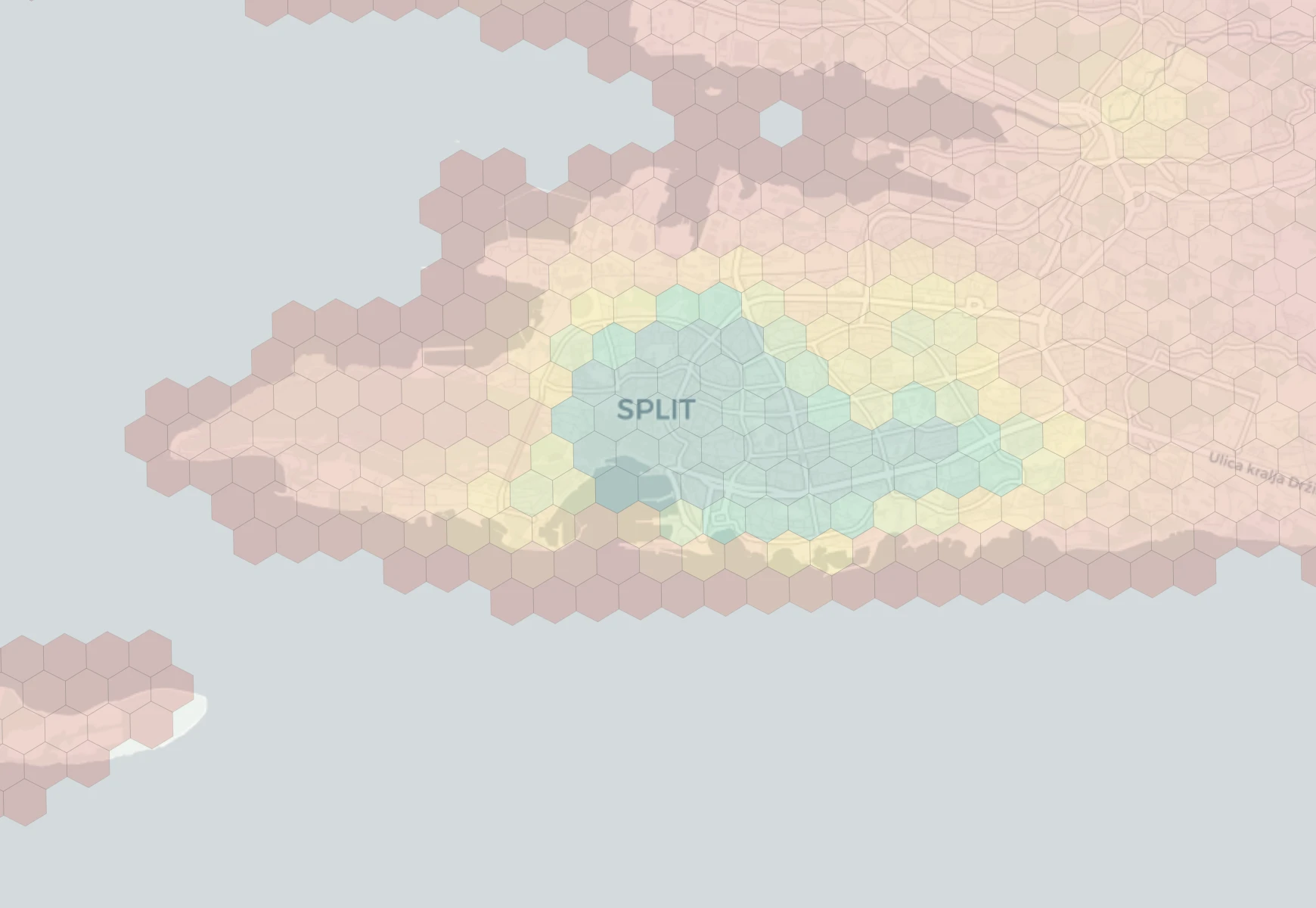
Data from OpenStreetMap contributors, licensed under ODbL. Scores computed across 22 categories using H3 hexagonal grid analysis. Last updated: 2026-04-25.