Good to Know
The city is so compact that most residents walk or cycle everywhere -- owning a car feels unnecessary within the center
Slovenia's location means Italy, Austria, and Croatia are all within a couple hours by car for weekend trips
The Slovenian language is challenging but the population speaks excellent English, German, and often Italian
Ljubljana's size means professional networks are small and personal -- reputation matters enormously
Healthcare and education quality are high, making it particularly attractive for families
Where to Live in Ljubljana
Trnovo is Ljubljana's bohemian quarter -- best for creative types and young professionals. The Trnovo Church and the tree-lined Gradascica stream give it a gentle character. It has long attracted writers, artists, and students, and the cafe culture reflects that heritage. It is walkable to the center but feels distinctly its own place, with a quieter and more reflective mood.
Bezigrajis the practical residential district north of the center -- best for families and those seeking value. A mix of apartment types from different eras, good schools, and the large Bezigrajski Dvor shopping area cover everyday needs. Tivoli Park is easily accessible, and bus connections to the center are frequent. It is not glamorous but it is comfortable and well-organized.
Rozna Dolina sits near the university -- best for students and academics. The neighborhood has a leafy, almost suburban feel with houses and gardens that feel surprising so close to the center. The embassies in the area add an international touch. It is quiet, safe, and pleasant for walking, with easy access to both the university and the city center.
Siska is a larger district northwest of center -- best for active lifestyles and nature access. It serves as the gateway to the trails and green spaces that lead toward the hills surrounding Ljubljana. The neighborhood itself has a mix of residential blocks and family houses with a strong community identity. Local shops, a cultural center, and good transit links make it self-sufficient for daily needs.
Top Neighborhoods by the Numbers
Explore Ljubljana by Category
Frequently Asked Questions
Is Ljubljana too small to be interesting long-term?
It depends on what you need. The cultural calendar is surprisingly active for its size, with festivals, concerts, and exhibitions throughout the year. The restaurant scene keeps evolving, and the outdoor recreation options are outstanding. But if you thrive on big-city anonymity and endless options, you may feel the limits after a year or two.
How is the job market for foreigners?
Smaller than in major capitals, but growing steadily in tech, life sciences, and tourism. Many international professionals work remotely while enjoying Ljubljana's quality of life. Speaking Slovenian opens more doors, but English-language roles exist especially in companies with international operations.
What about the winters?
Cold but manageable, with temperatures hovering around freezing and occasional snow. The upside is that ski resorts are very close and the city looks charming in winter light. Indoor culture is cozy, with excellent cafes and restaurants keeping spirits up through the darker months.
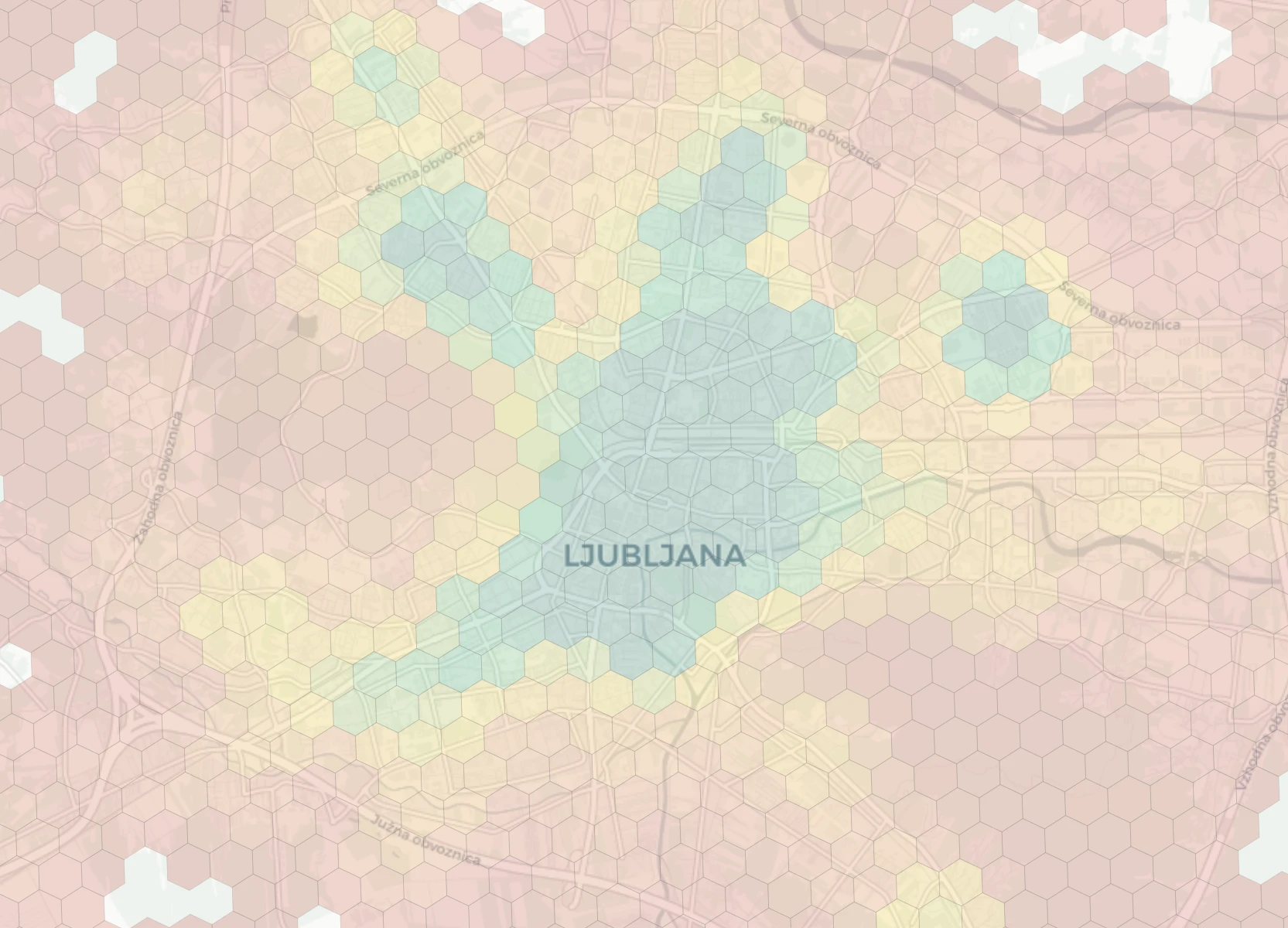
Data from OpenStreetMap contributors, licensed under ODbL. Scores computed across 22 categories using H3 hexagonal grid analysis. Last updated: 2026-04-25.