Good to Know
The Catalan language matters more than most expats expect -- official paperwork, school instruction, and local social circles often default to Catalan over Spanish.
August is when Barcelona actually belongs to residents again as half the city empties out and locals reclaim the beaches and terraces.
Finding a flat usually requires patience, cash deposits of 2-3 months upfront, and knowing someone -- online listings get snapped up within hours.
The superblock program is genuinely transforming neighborhoods, turning car-choked streets into playgrounds and terrace space almost overnight.
Barcelona's real food scene isn't on La Rambla -- it's in the market halls like Mercat de l'Abaceria in Gracia or Mercat de la Llibertat.
Where to Live in Barcelona
El Born and Sant Pere sit in the old city with medieval streets that open into hidden squares. The Mercat de Santa Caterina is the locals' alternative to the Boqueria, and the bars along Passeig del Born buzz every night. It's beautiful and atmospheric but noisy, touristy in parts, and flats tend to be small and old. Best for: nightlife lovers, young singles, culture addicts.
PobleSec climbs up the side of Montjuic and has quietly become one of the best eating streets in Barcelona along Carrer de Blai with its endless pintxos bars. It's well-connected, more affordable than the center, and has a genuinely mixed community -- local families alongside newer arrivals. The proximity to Montjuic means green space is never more than a walk uphill. Best for: foodies, budget-conscious residents, young couples.
Sant Antoni has had a renaissance since its gorgeous market reopened. The grid streets of the Eixample meet the character of the old city here, and the Sunday book and vintage market draws the whole neighborhood out. Excellent coffee shops and bakeries have clustered here, and the vibe is creative without being pretentious. Best for: foodies, design-conscious professionals, couples.
Sants is working-class Barcelona at its most authentic -- the pedestrianized Carrer de Sants is one of the longest shopping streets in Europe, the Sants station means you can be anywhere in Spain fast, and the Parc de l'Espanya Industrial is a wonderfully weird public space. Rents are noticeably lower and the neighborhood runs on its own rhythm, unbothered by tourism. Best for: families, budget-conscious movers, anyone wanting the real daily Barcelona.
Top Neighborhoods by the Numbers
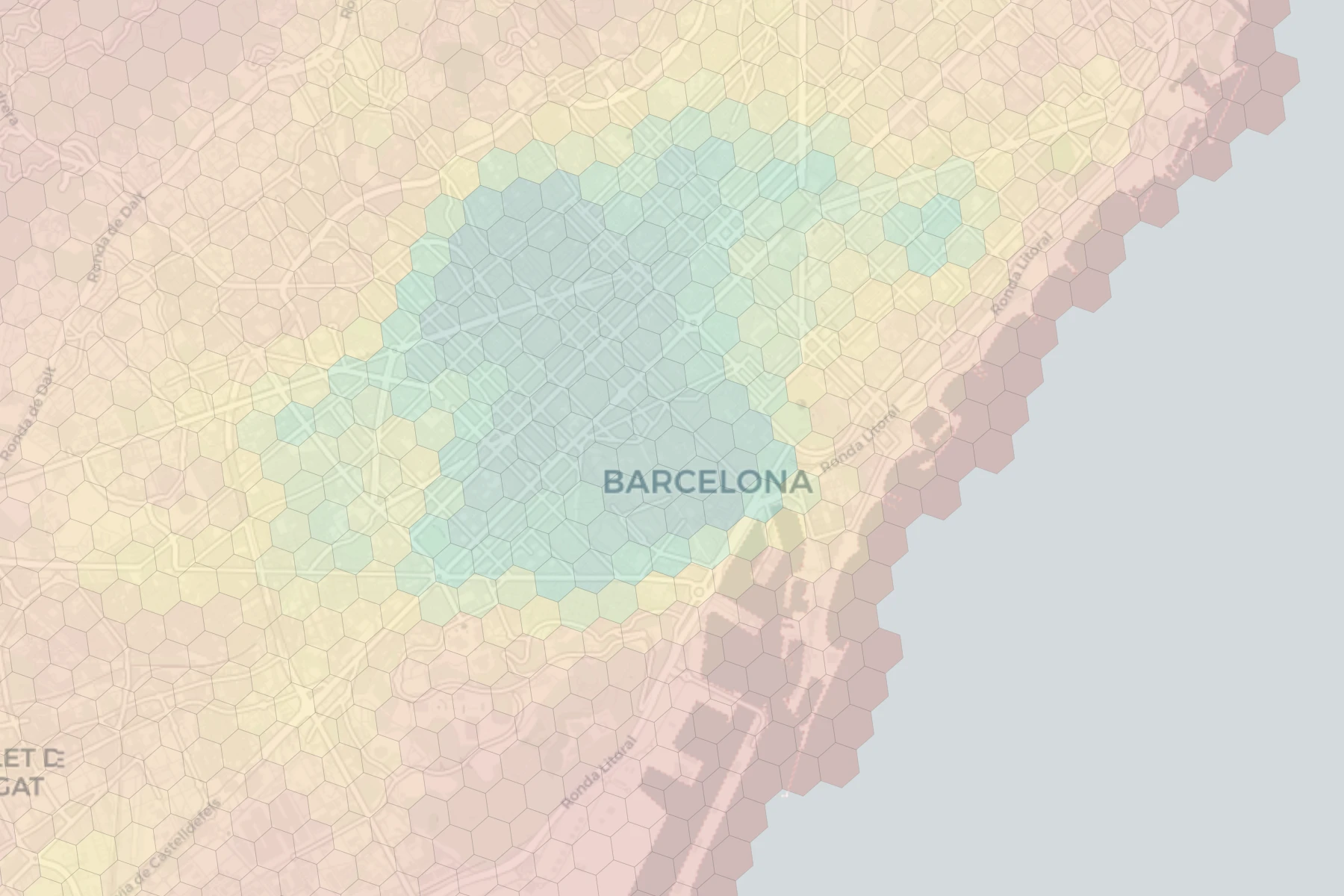
Explore Barcelona by Category
Frequently Asked Questions
Should I learn Catalan or Spanish first?
Start with Spanish if you speak neither -- it's more immediately useful for daily life and everyone speaks it. But make an effort with Catalan as soon as you can. Even saying 'bon dia' instead of 'buenos dias' signals respect for where you are, and it matters to locals more than they'll tell you.
Is Barcelona actually affordable on a local salary?
It's tight. Local salaries average around 1,500-2,000 euros net per month and rents for a one-bedroom start around 900 in decent areas. Remote workers on northern European salaries live well. On a local salary, expect to share a flat or live further out. The food and social life are cheap though -- a menu del dia lunch is still around 12 euros.
How bad is the tourist situation really?
La Rambla, Barceloneta beach, and the Gothic Quarter are genuinely overwhelmed from April through October. But move two streets away and you're in a normal neighborhood. Most residents simply avoid those zones and live their lives in Gracia, Sants, or Poblenou without ever feeling the tourist crush.
Data from OpenStreetMap contributors, licensed under ODbL. Scores computed across 22 categories using H3 hexagonal grid analysis. Last updated: 2026-04-25.