
Good to Know
The Turia Gardens, built in the old riverbed, are the city's green spine and one of Europe's best urban parks.
Paella is a lunch dish here, never dinner -- and never with chorizo, no matter what you've seen online.
Valencia has its own festival, Las Fallas in March, which is louder, wilder, and more spectacular than most people expect.
The city launched an extensive bike-sharing system and cycling network -- flat terrain makes it ideal.
The Central Market is one of Europe's largest fresh food markets and a daily destination for locals, not just tourists.
Where to Live in Valencia
El Carmen, in the old town, offers crumbling medieval charm mixed with street art and late-night bars. Living here means narrow streets, historic buildings, and being steps from the Cathedral and Plaza de la Virgen. The Torres de Serranos gateway and the hidden Plaza del Carmen are part of your daily landscape. It's atmospheric but can be noisy on weekends when the bars spill into the streets. Best for nightlife lovers and those who want historic character.
Benimaclet has a village soul -- a former pueblo absorbed by the city that retained its tight community, low-rise buildings, and a self-managed social center that hosts concerts and community events. The university campus is nearby, keeping the area young and affordable. Local bars and restaurants cater to regulars rather than tourists, and the weekly market is a neighborhood institution. Best for students, artists, and anyone seeking community.
El Cabanyal, the old fishermen's quarter near the beach, is Valencia's most dynamic transformation story. Colorful tiled facades line the streets, proximity to the sand means morning swims before work are routine, and a growing wave of restaurants and bars is bringing new life to the area. It still has rough edges but the energy is undeniable Best for beach lovers and those who want to be in on something early.
Eixample (Ensanche) offers wide, elegant avenues and solid Modernist architecture. It's central, well-connected by metro and bus, and has the Colon Market and excellent shopping along Calle Colon. Quieter and more residential than Ruzafa, with a polished feel that appeals to those who want comfort and convenience. Best for families and professionals who want a polished, central base.
Top Neighborhoods by the Numbers
Explore Valencia by Category
Frequently Asked Questions
How's the weather really?
Genuinely excellent. Summers are hot, reaching the high 30s in July and August, but the sea breeze helps and the beach is right there. Winters are mild -- you'll wear a jacket but rarely shiver. The occasional gota fria (cold drop) brings dramatic autumn storms, but they pass quickly. Most days, you'll be in sunshine.
Can I get by without Spanish?
In the expat bubble and tourist areas, yes. But Valencia is fundamentally a Spanish-speaking city (with Valenciano as a co-official language), and daily life -- markets, landlords, mechanics, doctors -- runs in Spanish. Learning it will transform your experience and is strongly recommended.
Is Valencia good for families?
Very. The beach, the Turia park, the City of Arts and Sciences -- kids have endless outdoor space. The pace of life is relaxed, the streets feel safe, and the culture is built around family meals and socializing. International schools exist but the public system is solid if you're comfortable with Spanish or Valenciano instruction.
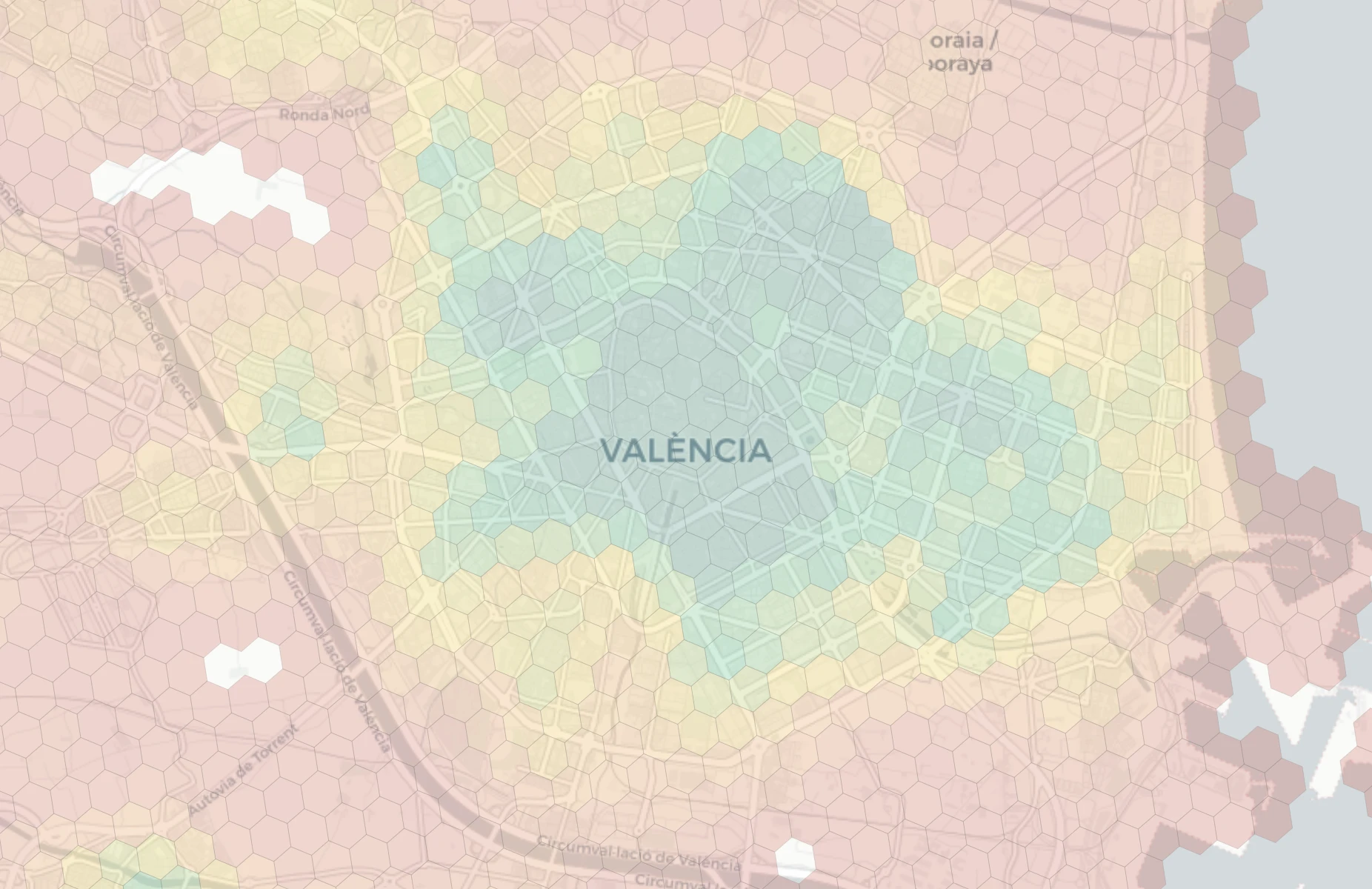
Data from OpenStreetMap contributors, licensed under ODbL. Scores computed across 22 categories using H3 hexagonal grid analysis. Last updated: 2026-04-25.