
Good to Know
Summer heat is no joke -- from June to September, locals plan life around shade and air conditioning, with siestas still genuinely practiced.
Free tapas with drinks are less common here than in Granada, but the tapas are larger, cheaper, and arguably better.
Seville's Semana Santa and Feria de Abril are not just festivals -- they define the social calendar and the city's identity.
The city has invested heavily in cycling infrastructure, with dedicated lanes along the river and through the center.
The Triana neighborhood across the river has its own fierce identity -- residents consider themselves Trianeros first, Sevillanos second.
Where to Live in Seville
Alameda de Hercules is Seville's creative and LGBTQ+-friendly hub. The wide boulevard lined with Roman columns, bars, and restaurants has become the city's most vibrant social gathering point. On warm evenings, hundreds of people sit on the terraces and benches until well past midnight. The surrounding streets hold vintage shops, coworking spaces, and a young, artsy population. Best for young professionals and nightlife lovers.
Santa Cruz, the old Jewish quarter, is tourist-heavy but undeniably beautiful. If you can find a flat on a quiet interior street, living among the orange trees, jasmine-scented patios, and hidden plazas is magical. The Murillo Gardens provide a green escape, and the Cathedral and Giralda tower are your neighbors. Best for those who prioritize beauty and atmosphere above all else.
Nervion is Seville's practical middle ground -- the Nervion Plaza shopping center, the Sanchez-Pizjuan football stadium, good metro and bus links, and a residential calm that the center lacks. It's where many working Sevillanos actually live, with reliable daily amenities and a no-nonsense neighborhood identity. Best for families and professionals who want a normal neighborhood.
Los Remedios, south of Triana, offers wide avenues, elegant apartment buildings, a family-friendly atmosphere, and proximity to the river for evening walks. It's well-kept, quiet, and hosts the Feria de Abril grounds each spring, when the neighborhood transforms into Seville's greatest party. Best for families and couples who want space and calm.
Top Neighborhoods by the Numbers
Explore Seville by Category
Frequently Asked Questions
How do people survive the summer heat?
You adapt. Air conditioning at home is essential, not optional. Locals eat late, socialize after sunset, and many leave the city entirely in August for the coast. Swimming pools, rooftop bars, and the river provide relief. By your second summer, you'll have developed your own heat survival routine -- and you'll find that the long, warm evenings are actually wonderful.
Is Seville affordable?
By Western European standards, yes. Rent is low, tapas and drinks are cheap, and daily life costs are modest. Salaries are also lower, so the equation depends on your income source. Remote workers earning Northern European salaries find it exceptionally good value. Locals manage but don't have huge disposable income.
Do I need a car?
Not in the city center. Seville is flat and very bikeable, the tram and bus network covers the main areas, and the old town is best explored on foot. A car becomes useful for weekend trips to the coast or the Sierra de Aracena, but for daily life it's more hassle than help -- parking in the center is a nightmare.
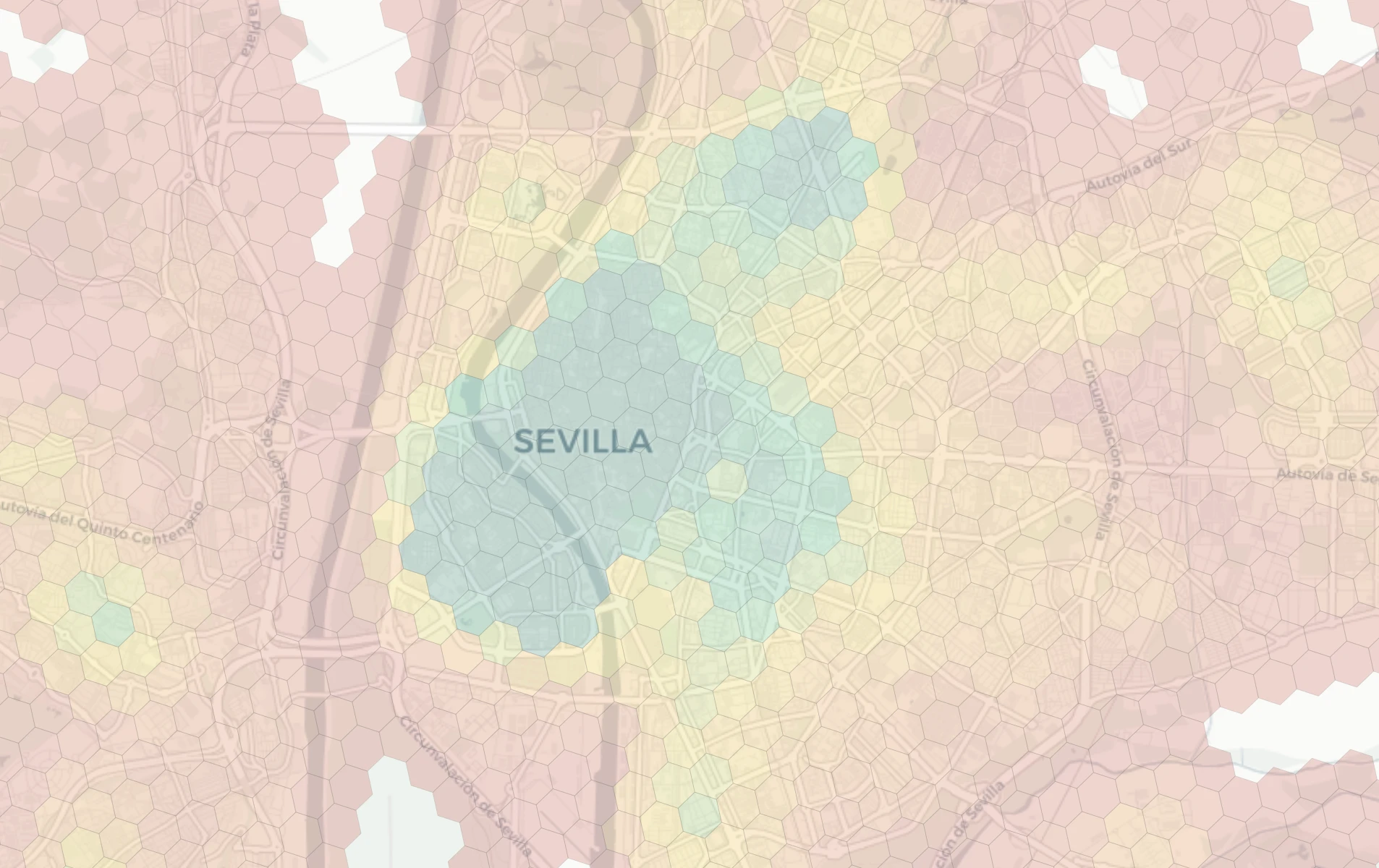
Data from OpenStreetMap contributors, licensed under ODbL. Scores computed across 22 categories using H3 hexagonal grid analysis. Last updated: 2026-04-25.