
Good to Know
Spanish bureaucracy requires patience -- getting your NIE residency number can take weeks, so start the process immediately
The tech sector is growing fast with Google and other major companies establishing offices, creating a genuine career ecosystem
Summer temperatures regularly exceed 35 degrees -- air conditioning is not optional, and siestas exist for a reason
Learning Spanish is essential for daily life, though the international community is growing and English is increasingly common in professional settings
The AVE high-speed train connects Malaga to Madrid in under 3 hours, making the capital easily accessible
Where to Live in Malaga
El Centro is the historic old town -- best for those who want to be immersed in Malaga's heartbeat. The streets around the cathedral and the Atarazanas Market pulse with energy, tapas bars, and local life. Living here means noise and tourists in some streets, but also the joy of stepping out your door into centuries of history. Apartments in renovated buildings can be stunning.
Pedregalejo is the old fishing village turned beachfront neighborhood -- best for beach lovers and families. The seafront promenade is lined with chiringuito beach restaurants serving fresh fish. The pace is slower, the community is established, and the morning swim-to-coffee routine becomes addictive. It is east of the center with good bus connections.
El Palo extends the coastal character even further east -- best for those seeking a genuine village feel within the city. Fishermen still pull boats onto the beach, and the local market has a neighborhood regulars atmosphere. Rents are lower than Pedregalejo, and the recent extension of bike lanes along the coast makes commuting to the center pleasant.
Teatinos is the modern university district -- best for students and families wanting new construction. Built around the University of Malaga campus, it offers spacious modern apartments, shopping centers, and a practical rather than charming atmosphere. The Metro connects it to the center, and the proximity to the technology park makes commuting easy for tech workers. It is the most affordable option for modern housing.
Top Neighborhoods by the Numbers
Explore Malaga by Category
Frequently Asked Questions
Is Malaga too hot in summer?
July and August are genuinely hot and life shifts accordingly -- mornings and evenings are for activity, afternoons are for staying cool indoors. The beach helps enormously, and the sea breeze makes coastal neighborhoods more bearable than inland areas. Most long-term residents say you adapt after your first summer.
How is the healthcare system?
Spain has excellent public healthcare, and Malaga's hospitals serve the entire Costa del Sol region. Registration with the local health center gives you access to general practitioners and specialist referrals. Private healthcare is also affordable and widely available, with many doctors speaking English.
What is the social scene like?
Warm and accessible, especially if you make an effort with Spanish. The international community has grown significantly with various meetup groups and coworking spaces facilitating connections. Spanish social life revolves around food and late hours -- dinner at ten is normal, and weekends start on Thursday night.
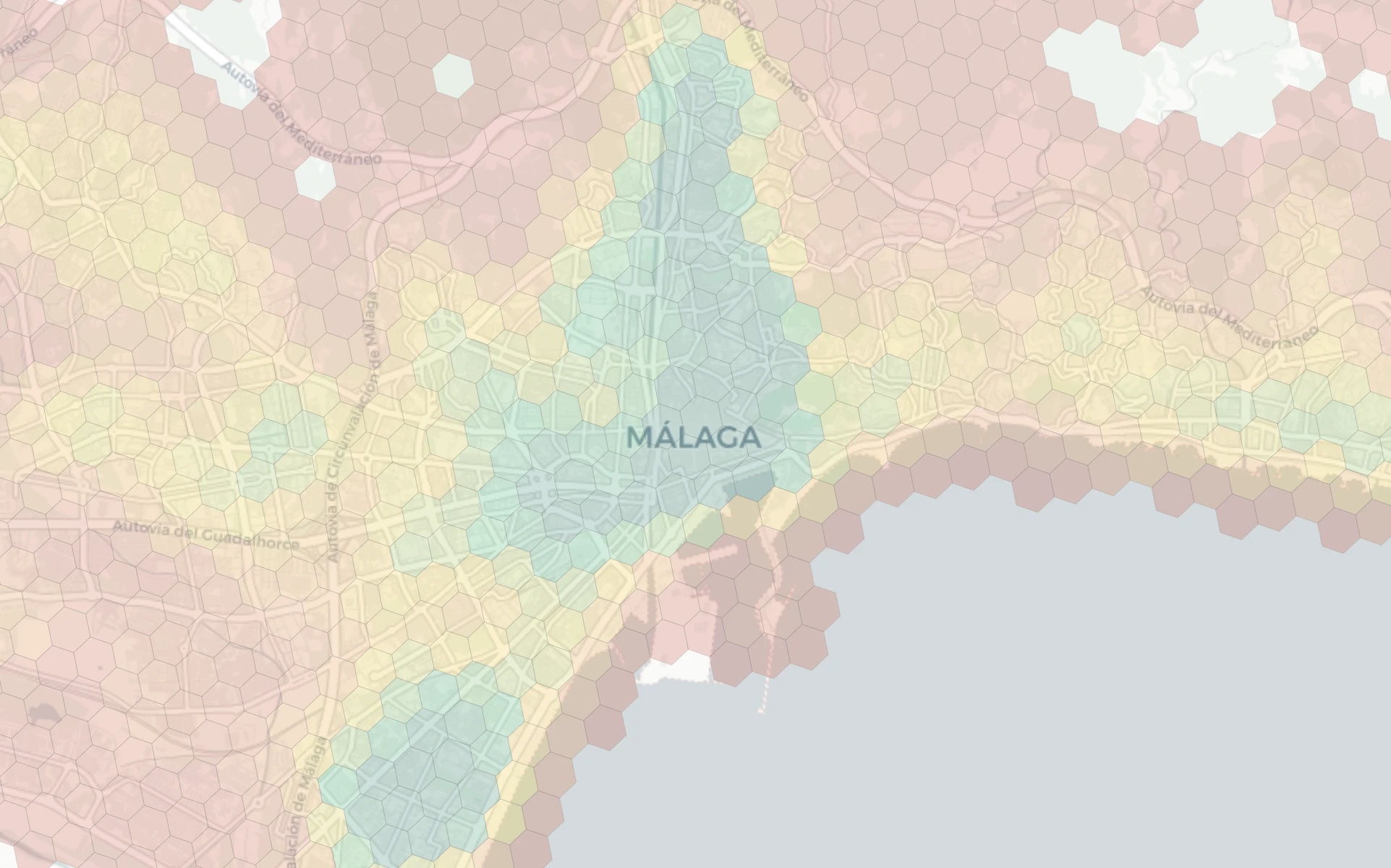
Data from OpenStreetMap contributors, licensed under ODbL. Scores computed across 22 categories using H3 hexagonal grid analysis. Last updated: 2026-04-25.