Good to Know
Most locals don't eat dinner before 9:30pm, and restaurants often don't open for dinner until 8:30pm -- adjust your clock or starve.
The metro covers nearly every neighborhood and runs until 1:30am, so owning a car is genuinely unnecessary.
August empties out the city as locals flee the heat, which means cheaper rent but also closed shops in residential areas.
Tap water is excellent -- it comes from mountain reservoirs and locals are proud of it.
The cercanías commuter trains connect you to Toledo, Segovia, and mountain towns for easy weekend escapes.
Where to Live in Madrid
**Lavapiés** is Madrid's most multicultural quarter. You'll hear a dozen languages walking down Calle Argumosa, and the food reflects it -- Indian, Senegalese, Chinese, Bangladeshi, all authentic and affordable. It's rough around the edges but bursting with character. Best for budget-conscious newcomers and foodies.
**Chamberí** is where young families and established professionals settle. Tree-lined streets, excellent local markets like Mercado de Vallehermoso, and a calm residential feel while still being central. The Canal de Isabel II park is a local favorite. Best for families and anyone wanting a quieter pace without leaving the center.
**La Latina** wraps around the famous Rastro flea market area. Sunday mornings here are legendary. The tapas bars along Cava Baja are some of the city's best. It's hilly, charming, and feels like a village within the city. Best for foodies and nightlife lovers.
**Retiro / Ibiza** sits next to Madrid's grandest park. Morning joggers circle the lake, families picnic on weekends, and the neighborhood itself is leafy and elegant. Slightly pricier but worth it for the green space and the calm. Best for families and anyone who needs daily nature.
Top Neighborhoods by the Numbers
Explore Madrid by Category
Frequently Asked Questions
Is Madrid affordable compared to what I'd expect from a European capital?
It's genuinely reasonable. A one-bedroom in a central neighborhood runs around 900 to 1,200 euros, and eating out -- especially the menú del día lunch deals -- is still a bargain. Groceries at Mercadona or local markets are easy on the wallet too.
How bad is the summer heat really?
July and August regularly hit 38 to 40 degrees. But it's dry heat, buildings have thick walls, and most newer apartments have AC. Locals adapt by shifting their schedule later and escaping to the mountains on weekends. You survive, and then September is glorious.
Do I need to speak Spanish to get by?
For daily life, yes -- at least a working level. Madrid isn't as English-friendly as some northern European capitals. But Madrileños are patient and encouraging with people who try, and the expat community is large enough that you won't feel isolated while learning.
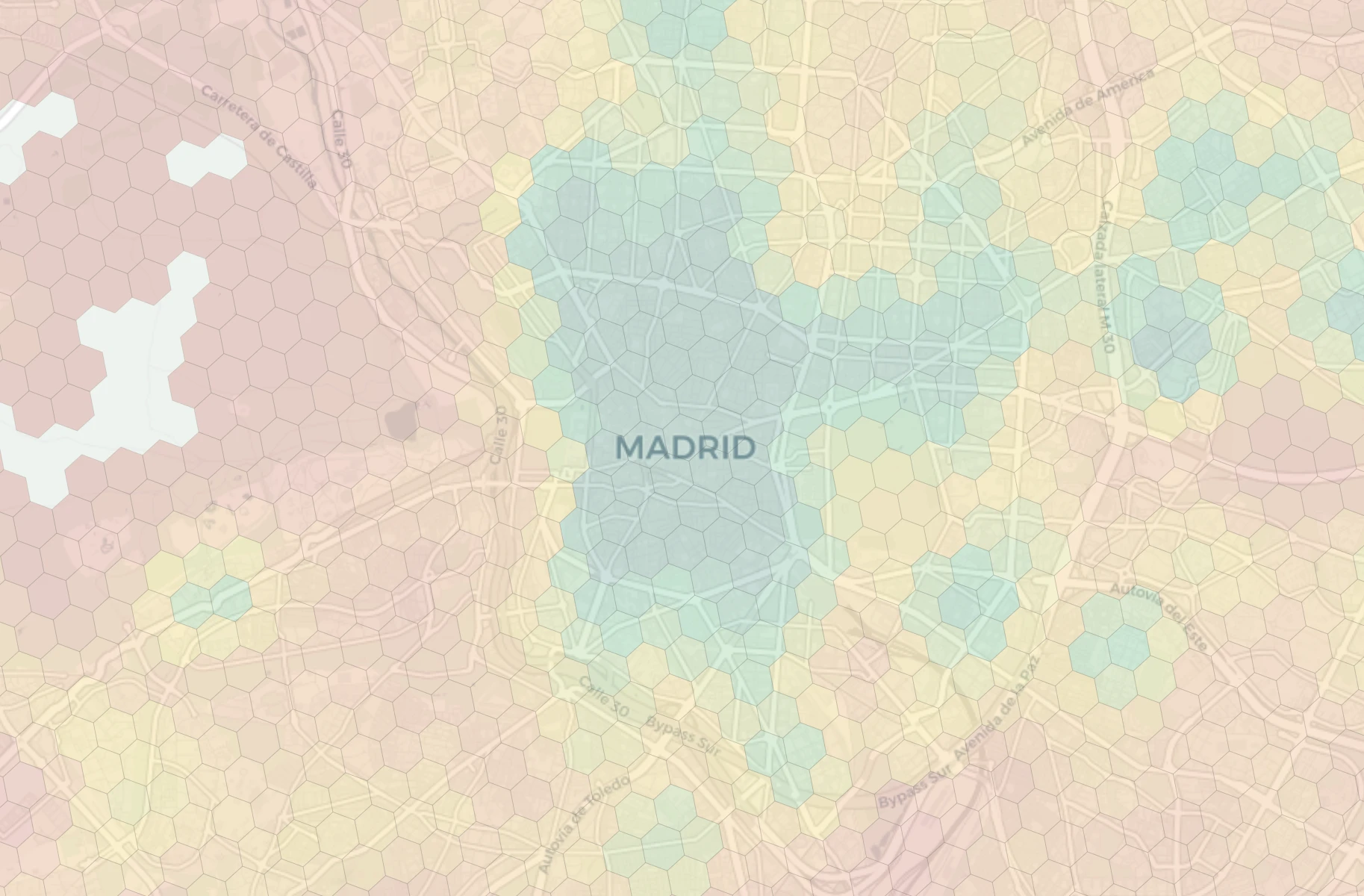
Data from OpenStreetMap contributors, licensed under ODbL. Scores computed across 22 categories using H3 hexagonal grid analysis. Last updated: 2026-04-25.