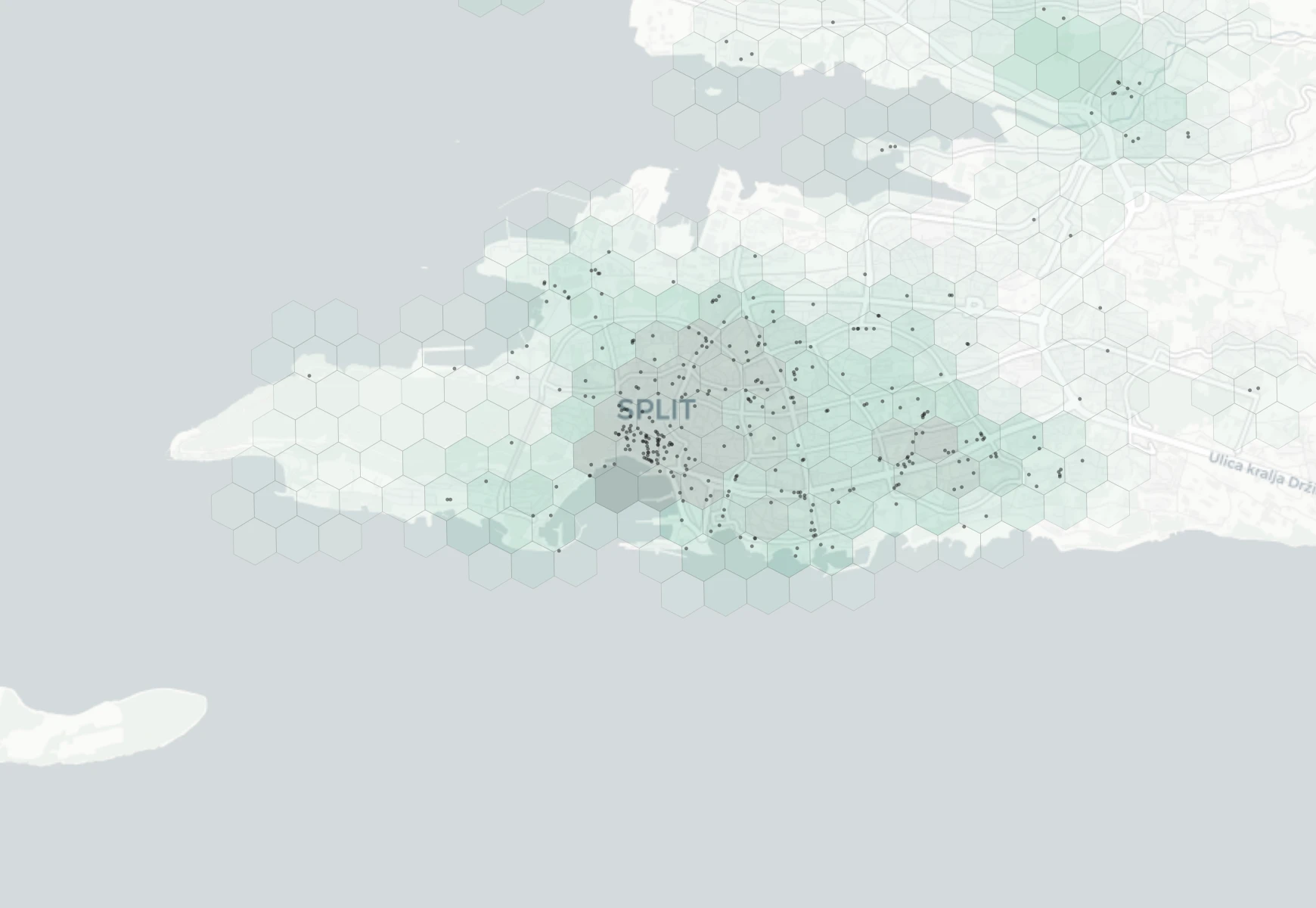
Top 5 Neighborhoods for Cafes & Culture
Cafes & Culture in Split
The Peristyle, the grand open courtyard at the heart of Diocletian's Palace, is both a cafe terrace and a cultural venue. Sitting on the ancient steps with a coffee, surrounded by Roman columns and the cathedral bell tower, is the quintessential Split experience. In summer, the Split Summer Festival uses the Peristyle as a stage for opera, theatre, and concerts -- watching a performance in this setting is genuinely unforgettable.
The Riva waterfront cafe culture is the social engine of the city. Morning coffee on the Riva is a sacred Split ritual -- people dress up, take their time, and treat the experience as a daily social event rather than a caffeine pit stop. The tradition of sitting, watching, and being watched has Mediterranean roots that go back centuries.
The Gallery of Fine Arts on Kralja Tomislava street houses Croatian art from the 14th century to the present in a beautifully restored hospital building. The Meštrović Gallery, set in the sculptor Ivan Meštrović's villa on the Marjan peninsula, displays his powerful works in rooms overlooking the sea -- the combination of art, architecture, and landscape is extraordinary. The nearby Kaštelet chapel, also part of the Meštrović complex, houses his wood-carved Life of Christ series.
Specialty coffee has arrived in Split, with third-wave cafes appearing in the palace streets and the Port area, though the traditional espresso culture remains dominant. The Croatian approach to coffee -- strong, unhurried, and fundamentally social -- shapes the experience regardless of the beans.
The Croatian National Theatre in Split, on Trg Gaje Bulata, presents drama, opera, and ballet in a 19th-century building that anchors the city's performing arts. The Kino Bačvice, a beautifully restored open-air cinema, screens films under the stars in summer -- an experience that combines cinema, warm night air, and the sound of waves from the nearby beach.
The palace basement halls, once the substructure supporting Diocletian's private apartments, now host exhibitions and installations that gain immense power from their subterranean Roman setting. These spaces are among the best-preserved Roman interiors in the world, and experiencing contemporary art within them creates a dialogue across seventeen centuries.