Good to Know
The splavovi (floating river clubs) are a uniquely Belgrade experience -- the scene shifts seasonally and ranges from turbo-folk to techno.
Serbian hospitality is real -- accepting coffee or rakija when offered is practically mandatory and always genuine.
Kalemegdan park and fortress is the city's living room, packed at sunset with families, couples, and friend groups.
Skadarlija, the bohemian quarter, is touristy but the live music and traditional restaurants still have soul.
Belgrade is one of the few European capitals where you can eat an excellent full meal for under five euros.
Where to Live in Belgrade
Vracar, centered on the massive Saint Sava Temple, is Belgrade's most established residential area. Tree-lined streets, good schools, and a concentration of bakeries, cafes, and small shops give it a genuine neighborhood feel where people know each other. The area around Kalenić market is particularly lively, with fresh produce and a social atmosphere every morning. Best for families and couples.
Zemun, technically a separate town absorbed into Belgrade, sits on the Danube with its own distinct Austro-Hungarian character. The Zemun quay with its fish restaurants, Gardos Tower views, and weekend riverside strolls create a small-town charm that feels worlds away from the city center. The local market is excellent. Best for those who want quiet waterfront living with easy bus connections to the center.
Savamala was Belgrade's creative district -- warehouses turned into bars, galleries, and event spaces along the Sava river. The Belgrade Waterfront development is transforming it rapidly, bringing modern towers, a shopping mall, and a new waterfront promenade. Opinions are divided, but the physical infrastructure is undeniably impressive. Best for those who want new, modern living near the center.
Novi Beograd (New Belgrade), the grid of socialist-era blocks across the Sava, is more livable than it looks. Large apartments with good natural light, green spaces between blocks, shopping malls, and excellent bus connections to the center. Block 45 near the river and the area around Hotel Jugoslavija have particular appeal. It's practical, affordable, and increasingly popular with young families. Best for budget-conscious newcomers and families.
Top Neighborhoods by the Numbers
Explore Belgrade by Category
Frequently Asked Questions
Is Belgrade safe?
Yes, very safe for a city its size. Street crime is low, and walking home late at night is normal. Football match days can get rowdy in specific areas, and you should use common sense in any busy nightlife area. But overall, personal safety is not something most residents think about much.
How's the language barrier?
Younger Belgraders generally speak good English, especially in central neighborhoods. Older generations less so. Serbian uses both Cyrillic and Latin script, which can be confusing at first. Learning basic Serbian phrases earns enormous warmth from locals, and the language is phonetically consistent, so pronunciation is straightforward.
What about the bureaucracy and infrastructure?
Be patient. Government offices often require multiple visits, paperwork in Serbian, and long waits. The roads can be rough, construction is everywhere, and things don't always work as expected. But this is part of Belgrade's character -- nothing is sterile or over-managed. Roll with it and you'll find the city's looseness is also what makes it so free and fun.
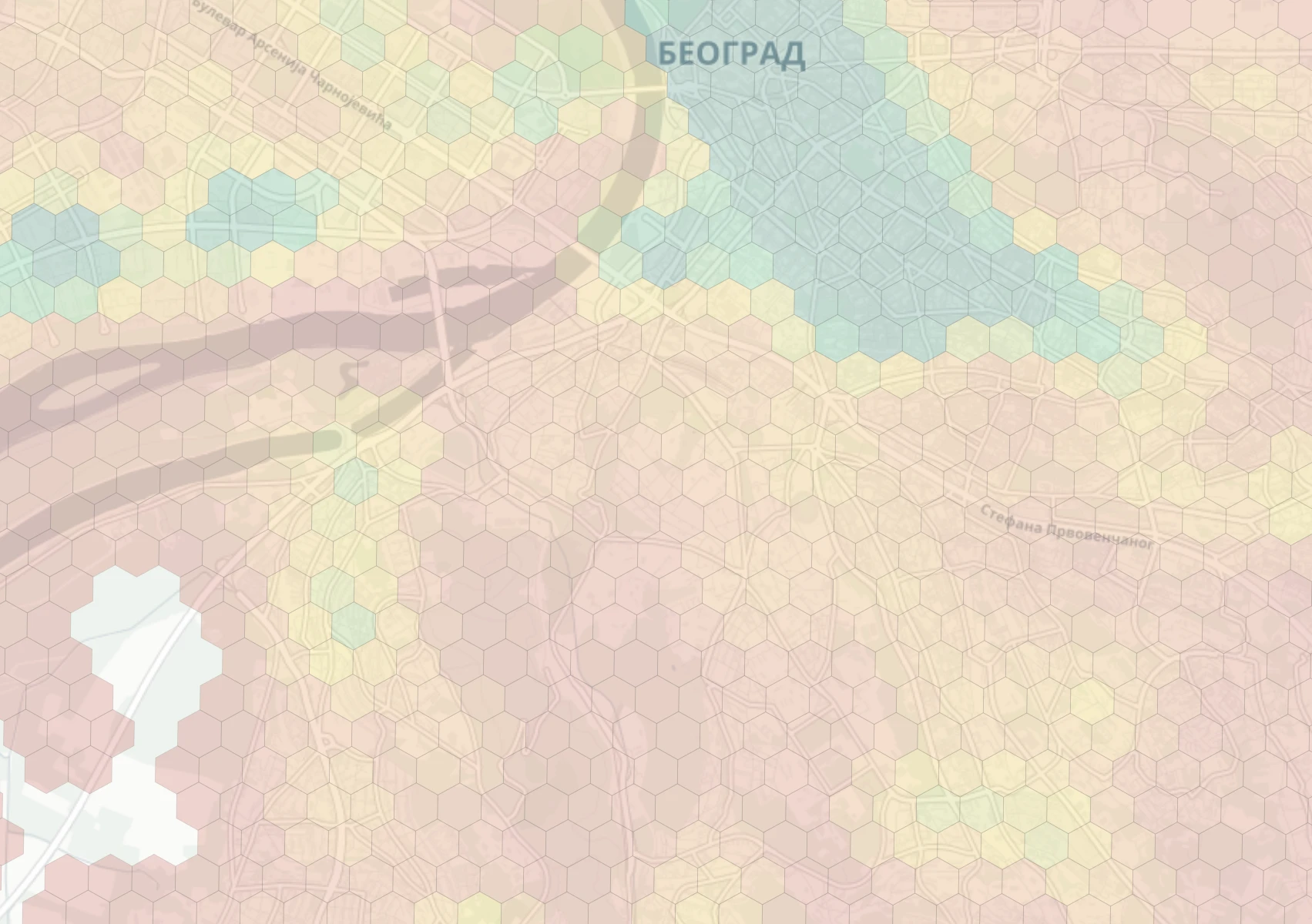
Data from OpenStreetMap contributors, licensed under ODbL. Scores computed across 22 categories using H3 hexagonal grid analysis. Last updated: 2026-04-25.