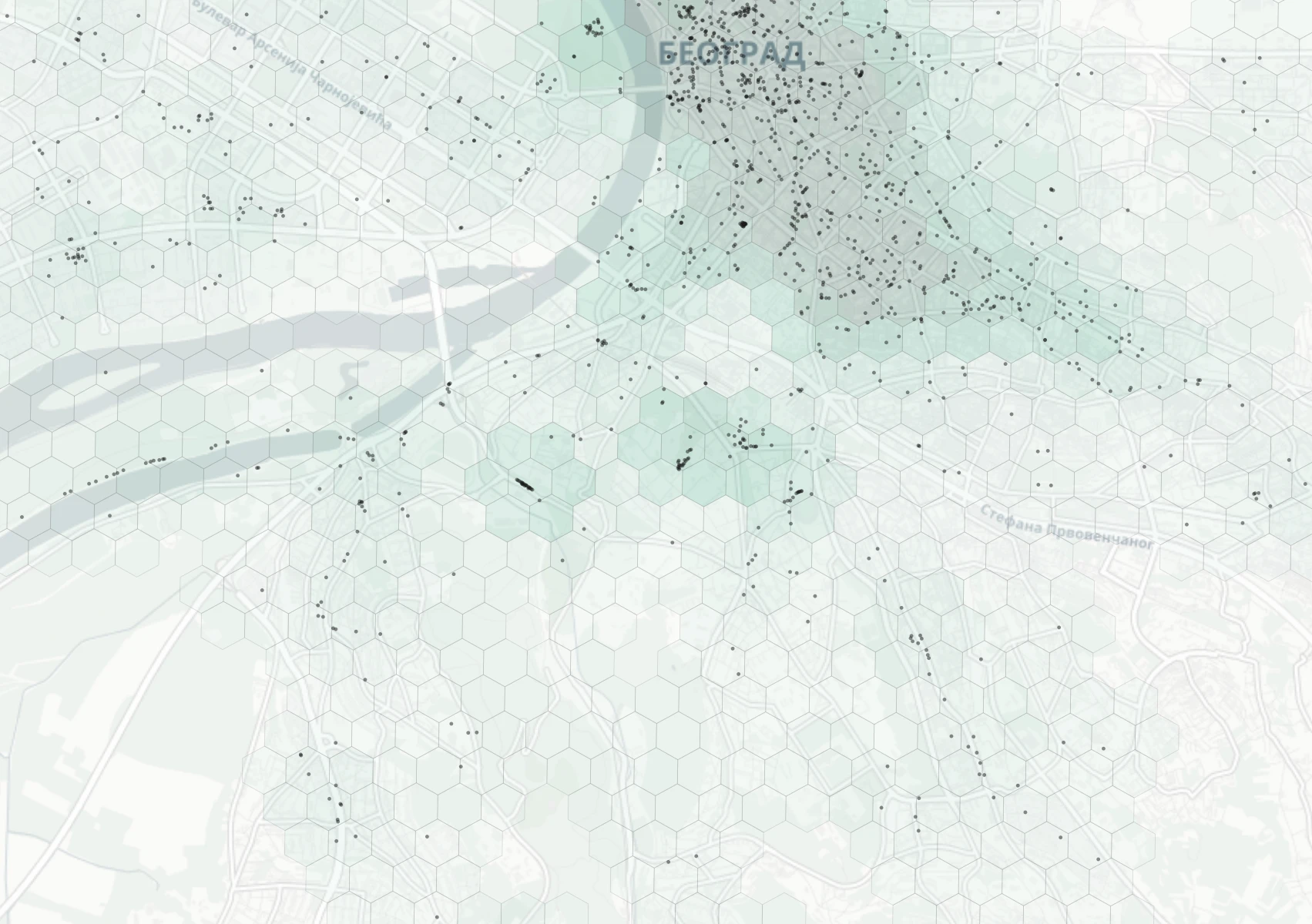
Top 5 Neighborhoods for Cafes & Culture
Cafes & Culture in Belgrade
The cafes along Knez Mihailova street and the surrounding pedestrian areas are the most visible, but for a more local experience, the Dorćol neighborhood's cafe scene is unmatched. The streets around Strahinjića Bana have cafes that range from sleek espresso bars to rambling, plant-filled spaces where artists and writers spend entire days. The domestic coffee tradition favors strong Turkish-style coffee, domaća kafa, served in small copper pots with a sugar cube and a glass of water.
The specialty coffee revolution has arrived in Belgrade with force. Cafes in Dorćol and Vračar now serve single-origin pour-overs alongside the traditional domaća, and the quality rivals any European city. The coexistence of old and new coffee cultures in the same neighborhoods creates a unique atmosphere.
Belgrade's cultural institutions reflect a complex history. The National Museum on Republic Square reopened after a lengthy renovation and houses an impressive collection spanning archaeology to Serbian art, including the famous Miroslav Gospel. The Museum of Contemporary Art in New Belgrade, a striking 1960s building overlooking the confluence of the Sava and Danube, holds one of the most important collections of Yugoslav art.
Kalemegdan Fortress, overlooking the river confluence, is Belgrade's most important historical site and functions simultaneously as a park, a gallery venue, a concert space, and a place where families, couples, and solitary walkers gather at sunset.
The Belgrade Philharmonic performs regularly at Kolarac Concert Hall on Studentski trg, one of the finest acoustic spaces in Southeast Europe. The National Theatre on Republic Square hosts opera, ballet, and drama. The Bitef Theatre Festival in September is one of Europe's oldest avant-garde theatre festivals and draws experimental companies from around the world.
Savamala's creative spaces add a contemporary layer. Former warehouses and industrial buildings host galleries, co-working spaces, and occasional exhibitions that reflect Belgrade's growing creative economy. The neighborhood's transformation from neglected riverfront to cultural district mirrors similar shifts in Berlin and Budapest but retains a specifically Belgrade roughness and vitality.
Mikser House, when active, functions as a design center and cultural hub. The KC Grad venue on Brace Krsmanović hosts music, art, and cultural events in a building that embodies Savamala's repurposed industrial aesthetic.