
Good to Know
Estonia's e-residency and digital ID system means you can register a business, file taxes, sign documents, and access government services without ever visiting an office.
The Old Town is stunning but locals rarely hang out there -- real Tallinn life happens in Kalamaja, Telliskivi, and Noblessner.
Summer in Tallinn means white nights with sunset around 11pm and sunrise at 4am -- the city transforms into an outdoor festival for 3 months.
The food scene has exploded recently, with restaurants like Leib and Oku putting New Nordic-Estonian cuisine on the map at very reasonable prices.
Russian speakers make up about a third of Tallinn's population, creating a bilingual city with two parallel cultural worlds.
Where to Live in Tallinn
Noblessner is Tallinn's newest waterfront district, built on a former submarine factory. It's all clean lines, modern architecture, and harbor views. The Kai art center and Proto invention museum anchor the cultural side, while restaurants along the waterfront have become destination dining. It's small and still developing, but the vision is ambitious. Best for: design lovers and professionals who want modern waterfront living.
Kadriorg is the elegant neighborhood centered around the baroque Kadriorg Palace and its surrounding park. The KUMU art museum sits at one end, wide tree-lined avenues stretch through residential areas, and the atmosphere is calm and cultured. It's more established and traditional than Kalamaja, with beautiful wooden and stone houses. Best for: families, art lovers, and anyone who wants green space and quiet.
Pelgulinn sits between Kalamaja and the sea, a residential area with an authentic neighborhood feel that's beginning to attract attention. Small local shops, a community garden scene, and some of the most affordable central housing in Tallinn. It's unpretentious and real. Best for: budget-conscious newcomers and families wanting a quiet but central base.
Pirita stretches along the coast northeast of the center, offering beaches, pine forests, and a botanical garden. The Tallinn TV Tower nearby has panoramic views. It feels more suburban, with larger apartments and houses. The beach here is Tallinn's best, with a long sandy stretch and coastal walking paths. Best for: nature lovers, families with kids, and anyone willing to trade nightlife for sea air.
Top Neighborhoods by the Numbers
Explore Tallinn by Category
Frequently Asked Questions
Is the winter really that bad?
It's not sugarcoatable. November through February is cold (regularly minus 10 to minus 20), dark (sunset at 3:30pm in December), and snowy. But Estonians embrace it -- there's sauna culture, winter swimming in the sea, and the snow makes the Old Town look magical. If you invest in proper clothing and find your winter routines, it's manageable. Many newcomers say the second winter is much easier.
How easy is it to meet people in Tallinn?
Estonians are famously reserved initially, but the expat and startup communities are welcoming and active. Meetups, co-working spaces like Lift99, and Telliskivi events make it easy to find your people. The city is small enough that you'll start running into the same faces quickly, which actually accelerates friendships. Learning a few Estonian phrases goes a long way.
Is Tallinn good for remote workers?
It's one of the best cities in Europe for it. Fast internet everywhere, co-working spaces with reasonable monthly rates, the digital nomad visa if you need it, and a cost of living that stretches a Western salary very comfortably. The time zone works for both European and partially for US East Coast collaborations.
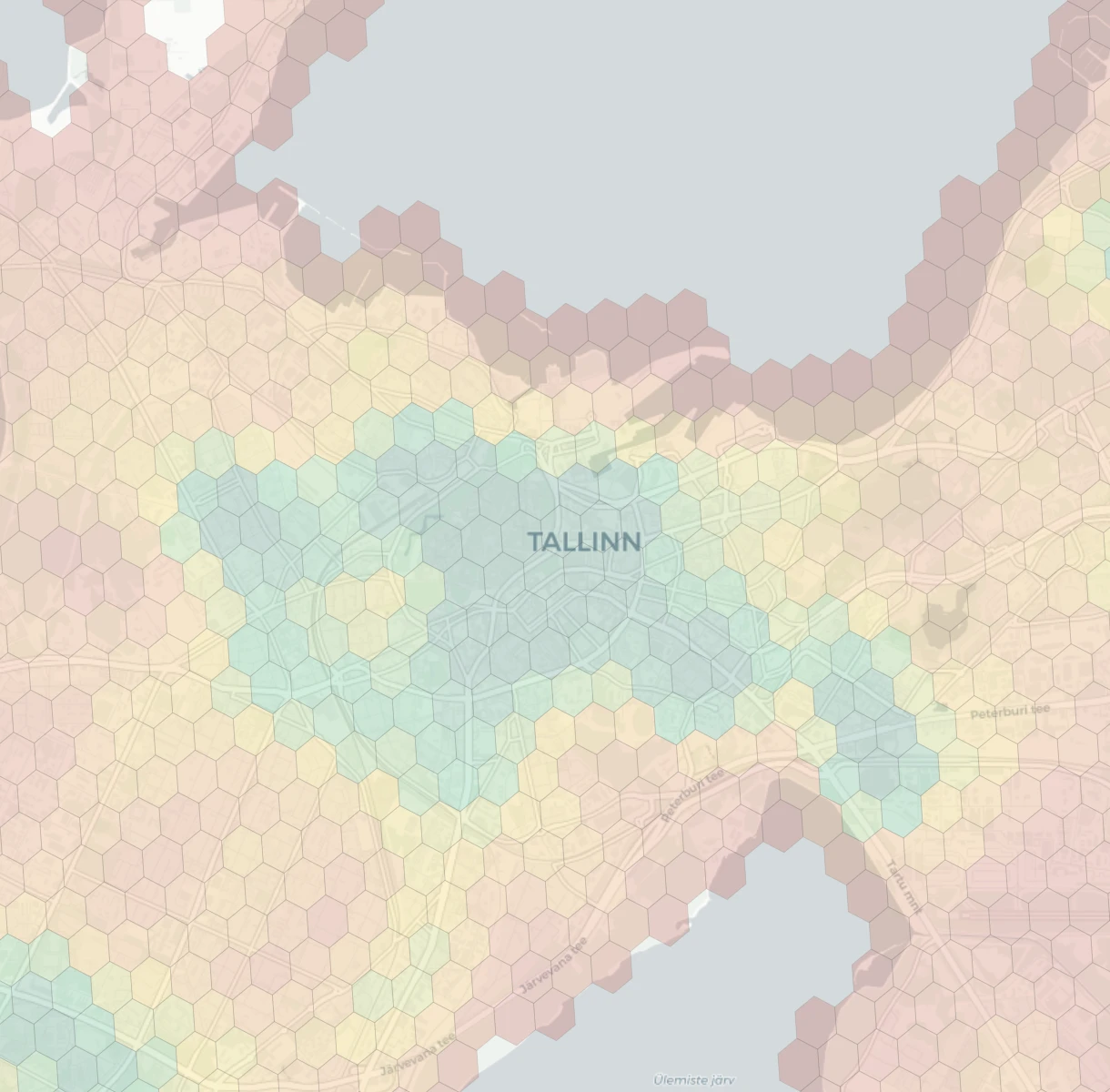
Data from OpenStreetMap contributors, licensed under ODbL. Scores computed across 22 categories using H3 hexagonal grid analysis. Last updated: 2026-04-25.