Good to Know
The housing queue through Stockholms Bostadsformedling is not a joke -- register immediately when you arrive, even if you have housing, because the wait averages over a decade.
Fika is not just coffee, it's a social institution -- you'll have at least two per day, and declining one at work is a minor cultural faux pas.
Stockholm's tap water is excellent and comes from Lake Malaren, so there's zero reason to buy bottled water.
The city essentially gets 18 hours of daylight in June and about 6 in December -- light therapy lamps are a genuine household staple.
Systembolaget is the state alcohol monopoly and closes at 3pm on Saturdays, so weekend planning requires actual forethought.
Where to Live in Stockholm
Ostermalm is Stockholm's elegant district -- wide boulevards, the beautiful Saluhall food market, and waterfront promenades along Strandvagen. It's expensive, quiet, and impeccably maintained. The dining scene is more refined here, with several of the city's best restaurants. Humlegarden park provides green space in the middle of it all. Best for: established professionals and families who want polish and calm.
Kungsholmen is the island that locals love and tourists skip. The waterfront path circling the island is perfect for running or evening walks, Ralambshovsparken is where half the city sunbathes in summer, and the restaurant scene along Fleminggatan and Scheelegatan has grown excellent. It feels residential without being boring. Best for: families, runners, and anyone who wants space near the center.
Vasastan sits just north of the city center and has a distinctly neighborhood feel despite its central location. The streets around Odenplan and Rorstrandsgatan are lined with bakeries, bookshops, and some of Stockholm's best casual restaurants. Vasaparken is lovely, and the architecture is classic Stockholm -- pastel apartment buildings with interior courtyards. Best for: couples and young families who want quiet centrality.
HammarbySjostad is Stockholm's showcase eco-district built on former industrial land south of Sodermalm. Modern architecture, waterfront living, excellent cycling infrastructure, and a strong community feel. It's newer and lacks the historic charm of Sodermalm, but the apartments are better designed and the neighborhood is family-oriented with good schools. Best for: young families who prioritize modern living and sustainability.
Top Neighborhoods by the Numbers
Explore Stockholm by Category
Frequently Asked Questions
Can I really swim in Stockholm?
Yes, and you absolutely should. The water in central Stockholm is clean enough to swim in -- Swedes are serious about water quality. Popular spots include Smedsuddsbadet on Kungsholmen, Langholmen beach, and Tanto on Sodermalm. In winter, many locals do ice swimming at dedicated spots, which sounds insane but is oddly addictive.
How do people handle the dark winters?
Honestly, the first winter is tough. The darkness is disorienting, and it's not just about cold -- it's the grey. Swedes cope with light therapy lamps, outdoor activities regardless of weather (there's a saying: there's no bad weather, only bad clothes), cozy dinner parties, and the collective understanding that everyone feels it. By your second winter, you'll have your own routines.
Is Stockholm really that expensive?
For everyday life, yes -- a casual lunch costs 12 to 15 euros, a beer at a bar is around 8 euros, and rent for a one-bedroom in a decent area runs 1,200 to 1,800 euros. But salaries reflect this, taxes fund excellent public services, and you save money in ways that aren't obvious -- free healthcare visits for children, subsidized daycare, and nature-based entertainment that costs nothing.
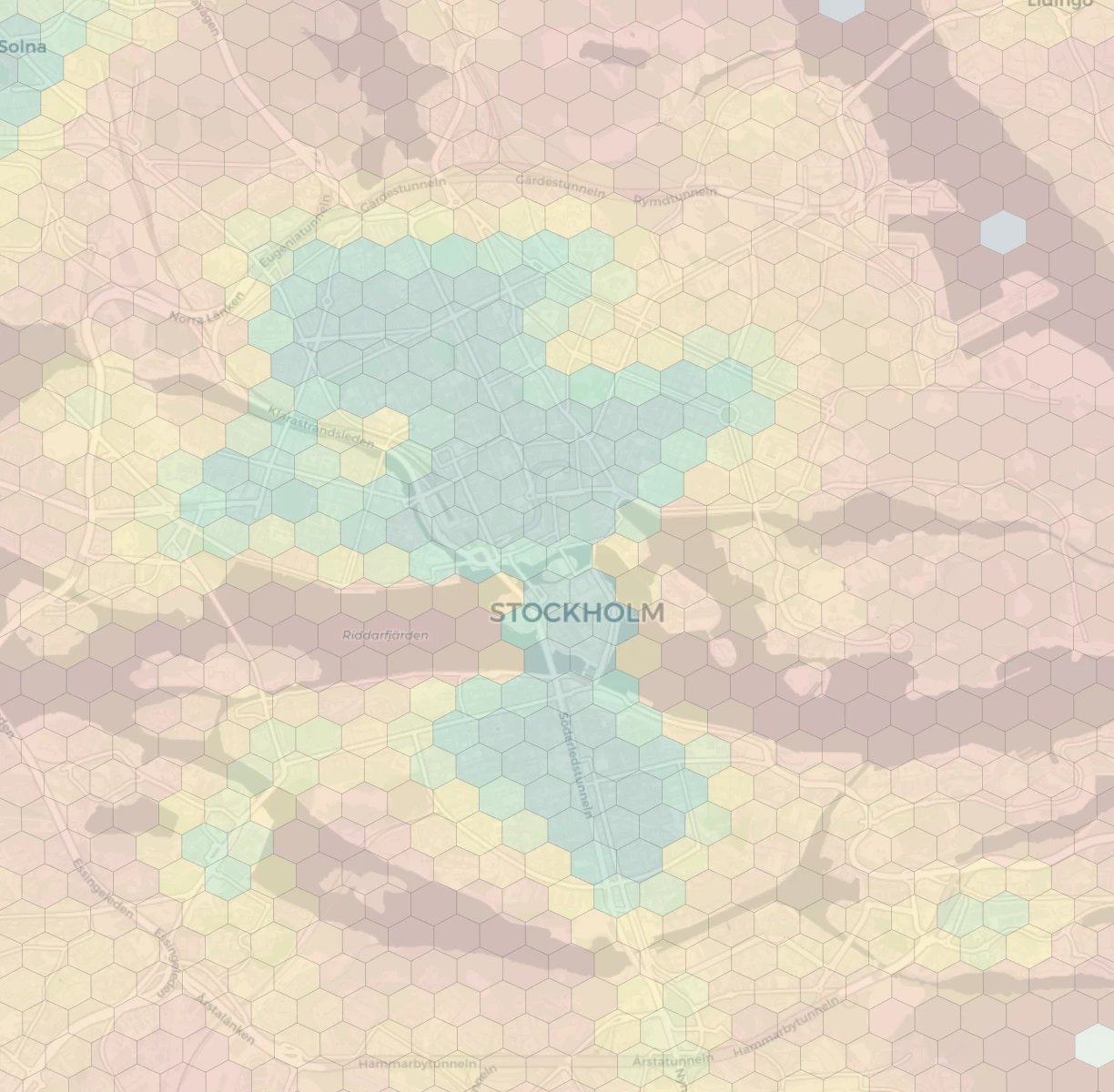
Data from OpenStreetMap contributors, licensed under ODbL. Scores computed across 22 categories using H3 hexagonal grid analysis. Last updated: 2026-04-25.