
Good to Know
The Atlantic coast is 20 minutes from downtown by metro, and locals surf year-round -- Porto has a surprisingly strong surf culture centered on Matosinhos beach.
A glass of excellent port wine at a lodge in Vila Nova de Gaia costs 3 to 5 euros, and a full dinner with wine at a good local restaurant rarely exceeds 25 euros per person.
Porto's Sao Bento station, with its 20,000 hand-painted azulejo tiles, is both a working transit hub and one of the most beautiful buildings in Europe.
The city's tech and creative scene has grown rapidly, with hubs like UPTEC and Porto Design Factory attracting startups and freelancers.
Portuguese bureaucracy is slow but functional -- getting a NIF (tax number) is your first hurdle, and once that's done, most things fall into place.
Where to Live in Porto
Cedofeita and the Rua Miguel Bombarda corridor have become Porto's creative nerve center. Galleries, design studios, independent shops, and some of the city's best coffee spots line these streets. The Praca de Carlos Alberto is a lovely gathering point, and the nightlife along Rua Galeria de Paris and Rua Candido dos Reis is the best in the city. It's walkable, central, and has real energy without tourist saturation. Best for: young professionals, creatives, and nightlife lovers.
Foz do Douro, where the river meets the Atlantic, is Porto's most coveted residential neighborhood. The waterfront promenade, Pergola da Foz, seafood restaurants, and the sound of the ocean make it feel like a coastal town annexed to a city. It's calmer and more expensive than the center, with beautiful houses and a strong community feel. Best for: families, established professionals, and anyone who needs the sea in their daily life.
Bonfim is the neighborhood that's been quietly building a reputation. East of the center, it has a genuine working-class Portuguese character with local tavernas, small grocers, and one of the best food markets in the city at Mercado do Bolhao nearby. Streets around Rua do Bonfim have excellent local restaurants and a growing cafe scene. Best for: budget-conscious newcomers and anyone seeking authenticity over polish.
Massarelos sits between the center and Foz, with a mix of old Porto charm and new creative energy. The Jardins do Palacio de Cristal -- Porto's most beautiful park with panoramic Douro views -- is the crown jewel. The neighborhood is quieter than Cedofeita but more central than Foz, making it an excellent compromise. Best for: couples and families who want views, green space, and a peaceful base.
Top Neighborhoods by the Numbers
Explore Porto by Category
Frequently Asked Questions
How does Porto compare to Lisbon for actually living?
Porto is smaller, cheaper, and grittier in the best way. You'll know your neighbors faster, the food culture is more rooted in tradition, and the tourist pressure, while growing, hasn't reached Lisbon's levels. The tradeoff is fewer international flights, a smaller expat community, and colder winters with more rain. Most people who've lived in both say Porto is the better city to actually live in.
Is the weather really that rainy?
Porto earns the nickname Invicta (the unconquered) partly because of its weather resilience. Winter months from November to March are genuinely rainy, and the Atlantic wind adds a chill. But summers are warm and beautiful, spring and autumn are mild and gorgeous, and even in winter, you get plenty of bright, crisp days between the storms.
What's the job market like for foreigners?
The tech sector is growing fast, with several international companies opening offices. Many expats work remotely on foreign salaries, which stretches very well here. Local Portuguese salaries are modest, so if you're job-hunting locally, manage expectations. Speaking Portuguese opens more doors, and the NHR tax regime (if you qualify) can be very favorable.
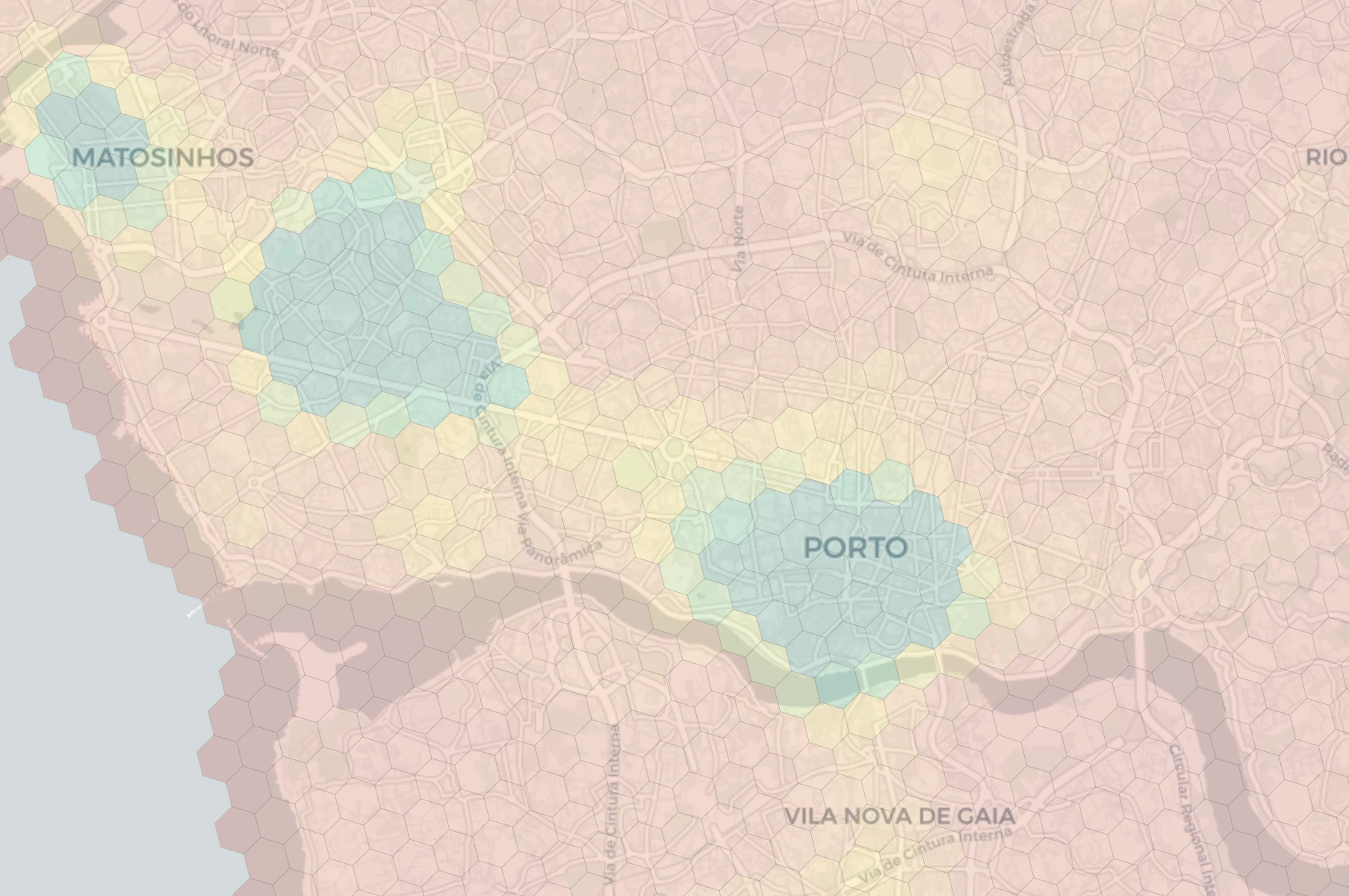
Data from OpenStreetMap contributors, licensed under ODbL. Scores computed across 22 categories using H3 hexagonal grid analysis. Last updated: 2026-04-25.