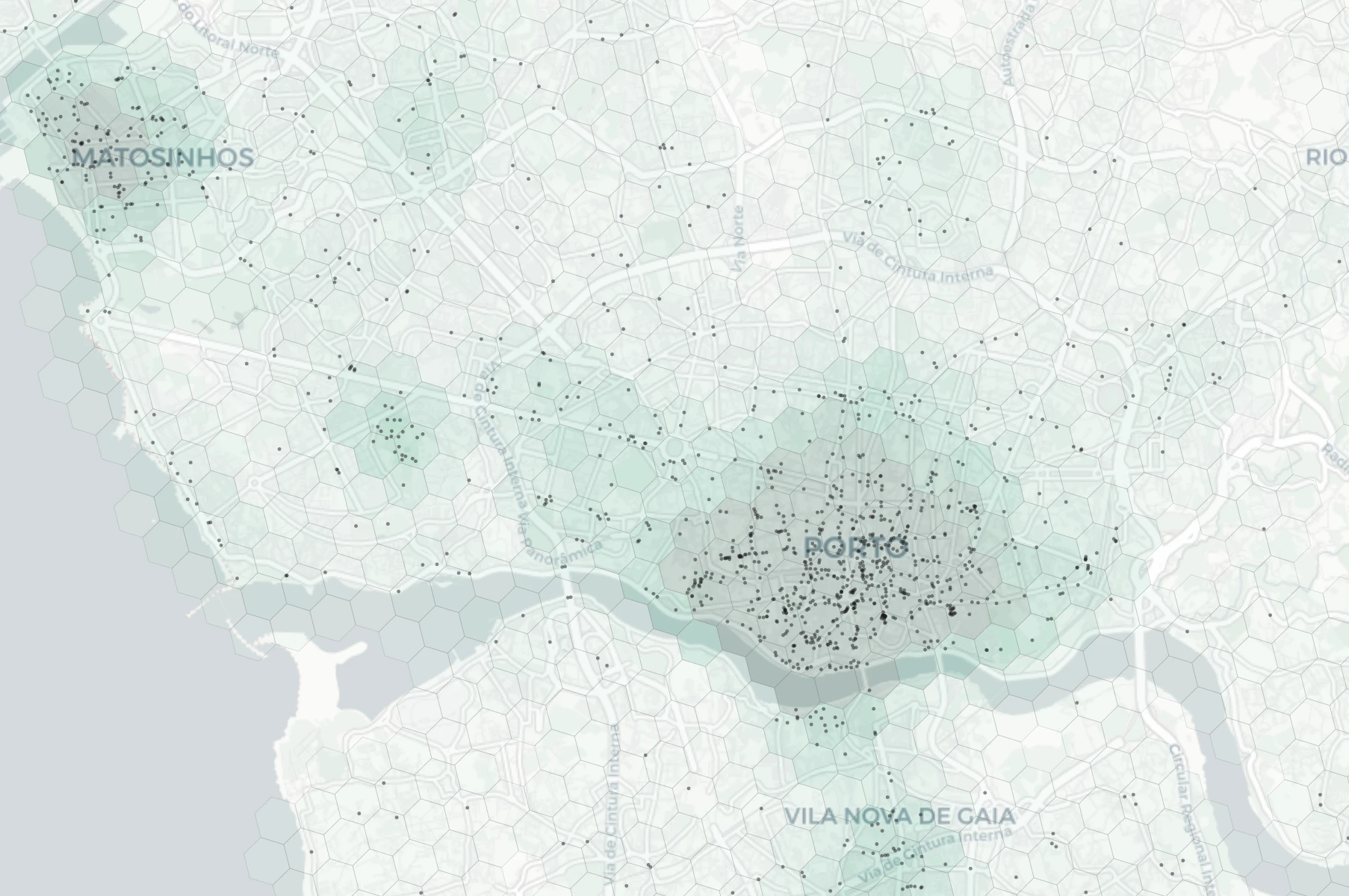
Top 5 Neighborhoods for Cafes & Culture
Cafes & Culture in Porto
Café Majestic on Rua de Santa Catarina is the most famous, with its Art Nouveau interior of carved wood, mirrors, and marble tables. It has become touristy, but sitting inside and ordering a coffee still connects you to the decades of writers and artists who made it their office. For a less crowded but equally atmospheric experience, find the traditional cafes along Rua das Flores and in the Ribeira quarter, where locals still outnumber visitors.
The specialty coffee scene has arrived in Porto with enthusiasm. Cedofeita and the streets around Miguel Bombarda host several excellent roasters and cafes that treat beans with the same care that Portuguese winemakers give their grapes. These spaces attract a younger creative crowd and have become informal co-working spots where freelancers and digital workers fuel their days.
Culturally, Porto offers a richness that belies its reputation as Lisbon's plainer sibling. The Serralves Museum of Contemporary Art, set in stunning gardens, holds Portugal's most important contemporary collection and stages exhibitions of international significance. The building by Álvaro Siza Vieira is itself a work of art -- his clean, light-filled spaces are among the finest museum architecture in Europe.
The Livraria Lello, beyond its Instagram fame, is a working bookshop in a building of extraordinary beauty -- the neo-Gothic facade and red staircase justify the attention. For more intimate literary experiences, independent bookshops in Cedofeita and the Clérigos area host readings and cultural events.
Casa da Música, Rem Koolhaas's angular concert hall near Rotunda da Boavista, hosts everything from the Porto National Orchestra to experimental electronic performances. The building itself is worth visiting -- the architectural tour reveals spaces and details invisible from outside.
The São João festival in late June transforms Porto into one enormous cultural celebration -- street parties, grilled sardines, plastic hammer fights, and fireworks over the Douro. It is the city's soul expressed in a single night.
The Palácio da Bolsa with its Arab Room, the São Bento station with its tile panels depicting Portuguese history, and the dozens of churches decorated with blue-and-white azulejos mean that cultural experiences in Porto are not confined to museums -- they are embedded in the daily environment.