Good to Know
Swiss punctuality is real -- setting your watch by the tram is not a joke, and being 5 minutes late to anything is considered genuinely rude.
The Badi culture (public lake and river swimming pools) is Zurich's best feature from May to September -- Locals go before work, at lunch, and after dinner.
Quiet hours are strictly observed: no laundry on Sundays, no loud activities after 10pm, and your neighbors will let you know if you violate them.
A one-bedroom apartment in the city center runs 1,800 to 2,500 CHF per month, but a typical Zurich salary for a professional role starts around 6,000 CHF after tax.
The 25-minute train from Zurich HB to Uetliberg mountain gives you hiking trails with panoramic views of the Alps and the city -- locals use it like a city park.
Where to Live in Zurich
Kreis 3 (Wiedikon) is the neighborhood that's having a quiet moment. Centered around Idaplatz with its tree-shaded square and excellent restaurants, it has a village-within-a-city feel. The Saturday market on Bullingerplatz is lovely, and Uetliberg is practically in the backyard. It's residential, family-friendly, and increasingly popular with young professionals. Best for: families, couples, and anyone who wants community.
Kreis 5 (Zurich West) transformed from an industrial wasteland into the city's design and dining district. The Viadukt -- a converted railway viaduct with shops and a market hall -- anchors the neighborhood. Frau Gerolds Garten is the summer hangout everyone loves, and the area around Hardbrucke has some of Zurich's most interesting architecture. Best for: design lovers, young professionals, and brunch enthusiasts.
Seefeld in Kreis 8 is the lakeside neighborhood with a polished, almost Mediterranean feel in summer. The lake promenade, Tiefenbrunnen Badi, and the Chinese Garden make it feel like a resort town. Dining along Seefeldstrasse is excellent if pricey. It's quieter than the west side and attracts a slightly older, established crowd. Best for: established professionals who want waterfront living and calm.
Niederdorf and Oberdorf in Kreis 1 make up the Old Town, and while touristy by day, they're genuinely charming to live in. Narrow medieval streets, hidden courtyards, and some of the city's oldest restaurants give it character. Lindenhof park is a peaceful retreat. The downside is noise from weekend crowds and limited apartment options. Best for: singles and couples who want history and walkability above all.
Top Neighborhoods by the Numbers
Explore Zurich by Category
Frequently Asked Questions
Is Zurich boring?
This is the most common misconception. Zurich has a thriving electronic music scene, excellent restaurants ranging from hole-in-the-wall Turkish places on Langstrasse to Michelin-starred spots, world-class museums, and lake and mountain activities year-round. It's not Berlin-level nightlife, but it's far from boring. The city's energy is just quieter and more intentional.
Can I live in Zurich without speaking German?
In daily life, yes -- English is widely spoken in professional settings, shops, and restaurants. But Swiss German is important for true integration, and it's a distinct dialect from standard German. Many expats learn Hochdeutsch first and pick up Swiss German through immersion. For bureaucratic tasks and apartment hunting, German helps enormously.
How does the health insurance system work?
Health insurance is mandatory and private in Switzerland. You choose from competing providers, with basic monthly premiums running 300 to 450 CHF for adults. The system is excellent but expensive. Dental is not covered. Most employers don't provide health insurance -- it's your personal responsibility. Compare plans on comparis.ch before choosing.
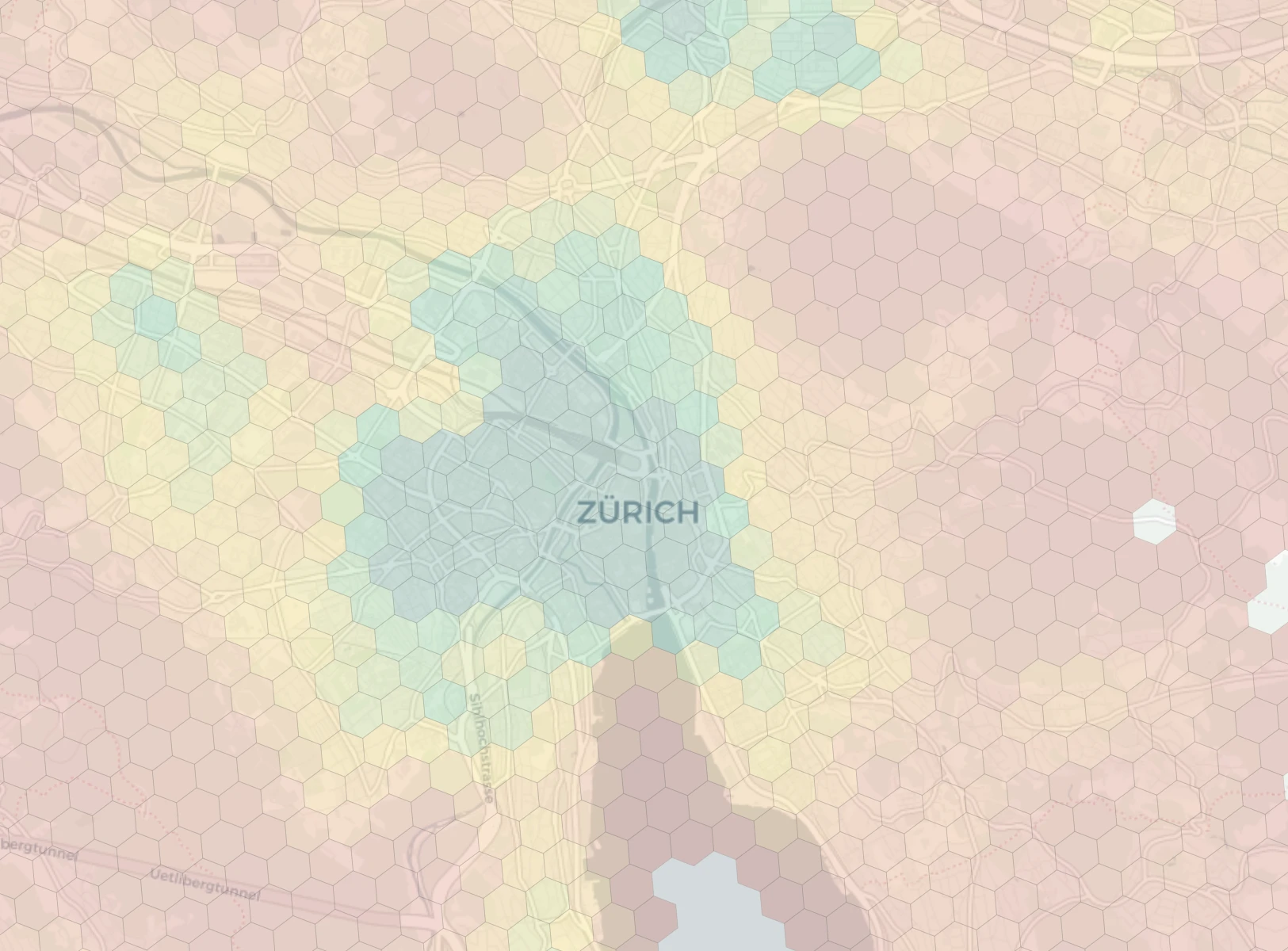
Data from OpenStreetMap contributors, licensed under ODbL. Scores computed across 22 categories using H3 hexagonal grid analysis. Last updated: 2026-04-25.