Good to Know
The Anmeldung registration must happen within two weeks of moving in -- it unlocks everything else, so prioritize finding an apartment quickly
Frankfurt's central location and airport make it ideal for roles requiring frequent European travel
Apple wine culture in Sachsenhausen is not a tourist trap -- it is genuine local tradition and an easy way to meet people
The housing market is tight in central districts, but the excellent S-Bahn means suburbs like Oberursel or Bad Homburg are viable commuter options
Summers along the Main River are surprisingly pleasant, with swimming, cycling, and open-air festivals
Where to Live in Frankfurt
Sachsenhausen is the historic district south of the Main -- best for newcomers and social butterflies. The Alt-Sachsenhausen area has traditional apple wine taverns that are essential Frankfurt experiences. Beyond the tavern quarter, the residential streets are leafy and calm, and the Museum Embankment puts a dozen world-class museums within walking distance. The Flea Market on Saturdays along the river is a weekly institution.
Bornheim calls itself Frankfurt's happiest neighborhood -- best for those who love community and nightlife. Berger Strasse continues through here with an even livelier atmosphere, packed with bars, restaurants, and shops. The annual Berger Strasse festival is one of the largest neighborhood parties in Germany. Housing is a mix of old and new, and the community spirit is palpable.
Bockenheim has a university-area energy -- best for students, academics, and budget-conscious newcomers. The Leipziger Strasse has international restaurants and late-night shops, and the proximity to the Palmengarten botanical garden adds unexpected beauty. It is well-connected by U-Bahn and offers more affordable rents than Nordend while maintaining a lively and diverse character.
Westend is where old money meets green spaces -- best for established professionals and families wanting quiet elegance. Grand villas, the sprawling Gruneburgpark, and proximity to the Palmengarten create a refined atmosphere. It is also close to the banking district for those who want to walk to work. Prices are among the highest in the city, but the quality of the environment matches.
Top Neighborhoods by the Numbers
Explore Frankfurt by Category
Frequently Asked Questions
Is Frankfurt boring compared to Berlin or Munich?
It is smaller and quieter, yes, but boring is unfair. The cultural calendar is strong, the restaurant scene is diverse, and the quality of daily life is excellent. Frankfurt's appeal is in its livability and convenience rather than spectacle. Many residents appreciate the lack of pretension and the ease of getting things done.
How important is German for living in Frankfurt?
The financial and corporate sectors operate heavily in English, and many international residents manage daily life without German. However, learning German significantly improves your social life, housing search, and interactions with local businesses and government offices. Frankfurt is more English-friendly than most German cities outside Berlin.
What is the commuter culture like?
Very established. The S-Bahn and regional rail network is extensive and reliable, and many people live in the Taunus hills or nearby towns while working in the city. Commute times of 20-40 minutes by train are standard and generally comfortable.
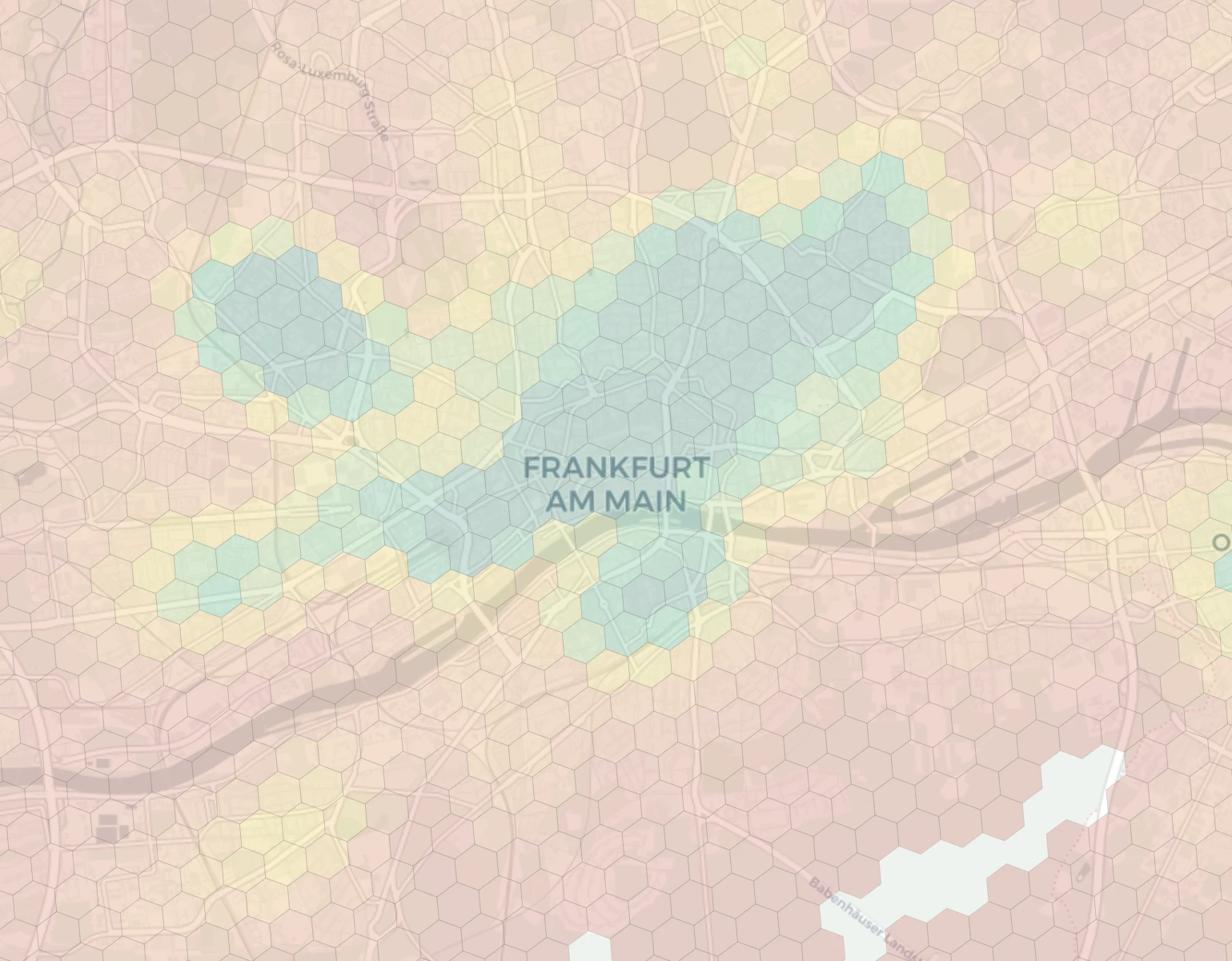
Data from OpenStreetMap contributors, licensed under ODbL. Scores computed across 22 categories using H3 hexagonal grid analysis. Last updated: 2026-04-25.