Good to Know
The cost of living is significantly lower than Western European capitals, making it an excellent base for remote workers
Polish people can seem reserved at first, but once you are in their circle, the hospitality and loyalty are remarkable
The city is very spread out -- choose your neighborhood based on where you will work or spend most time
Polish is a difficult language but even small efforts are deeply appreciated and open doors
Warsaw's startup and tech ecosystem is one of the fastest-growing in the EU
Where to Live in Warsaw
Praga is Warsaw's right-bank revelation -- best for artists, nightlife lovers, and those who want authenticity. Long considered rough around the edges, Praga has retained its pre-war architecture and gritty character while gaining incredible bars, galleries, and street art. The Soho Factory complex anchors the creative scene. It is the most distinctive district in the city and rents remain lower than the left bank.
Srodmiescie is the central district and the obvious choice -- best for newcomers and those who want everything at their doorstep. The area around Nowy Swiat and the Old Town offers walkability, restaurants, and cultural landmarks. It is pricier than outer districts but eliminates commuting and puts you in the heart of the action.
Zoliborz is Warsaw's intellectual neighborhood -- best for academics, writers, and quiet-seeking couples. Historically home to the city's intelligentsia, it has a calm, green character with excellent access to the Vistula riverbank. The Plac Wilsona area has charming local shops and cafes. It feels thoughtful and intentional in a way that sets it apart from busier districts.
Wilanow is the southern suburb with a royal heritage -- best for families seeking space and greenery. The Wilanow Palace and its gardens set the tone for a district that feels almost like a small town. New developments offer modern apartments with more square meters per zloty than anywhere central. The tradeoff is a longer commute, but for families prioritizing space, it is hard to beat.
Top Neighborhoods by the Numbers
Explore Warsaw by Category
Frequently Asked Questions
Is Warsaw a good city for remote workers?
Excellent. Fast internet is standard, coworking spaces are plentiful and affordable, and the cost of living means your money stretches further. The time zone works well for collaborating with both Western European and some US East Coast teams.
How do people get around in winter?
The public transit system runs reliably through winter, and the city is well-practiced at managing snow. The Metro is the most comfortable option in harsh weather. Many people also drive, though traffic can be heavy during rush hours. Cycling drops off in winter but is popular from spring through autumn.
What is the food scene really like?
Far better than most people expect. Beyond excellent traditional Polish food -- think pierogi, zurek soup, and smoked meats -- Warsaw now has a vibrant scene of Asian fusion, Middle Eastern, Italian, and modern European restaurants. The milk bar tradition offers incredibly cheap home-style meals, and the coffee culture has become genuinely outstanding.
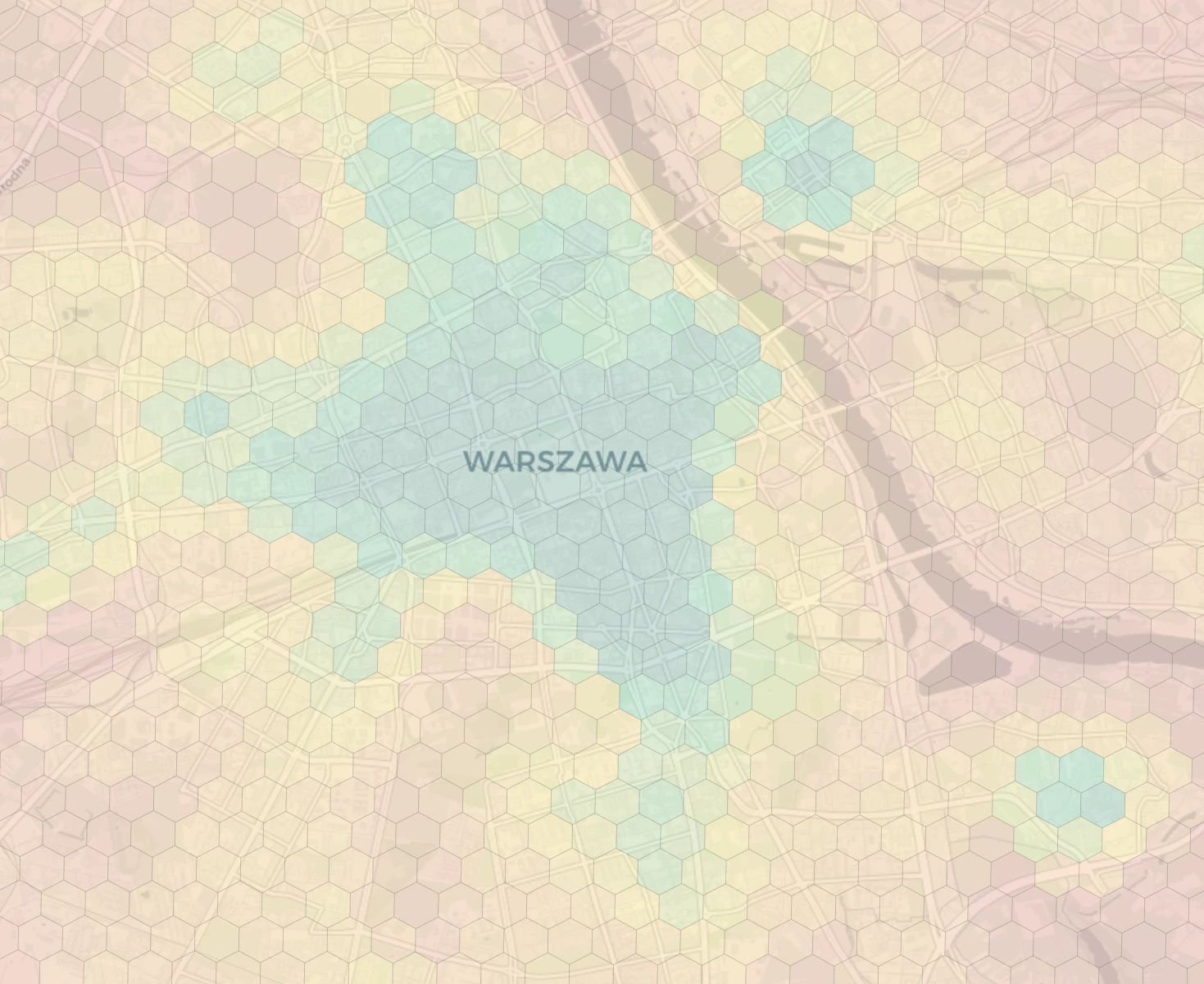
Data from OpenStreetMap contributors, licensed under ODbL. Scores computed across 22 categories using H3 hexagonal grid analysis. Last updated: 2026-04-25.