
Good to Know
More people commute by bicycle than by car in central Copenhagen -- the infrastructure makes it effortless.
Joining a forening (club or association) is the most reliable way to build a social life as a newcomer.
The harbor is clean enough to swim in -- Islands Brygge harbor bath is packed on sunny days.
Dining out is expensive, but the supermarket prices are reasonable and home cooking culture is strong.
Danes leave work by 4pm most days -- overtime culture is genuinely frowned upon.
Where to Live in Copenhagen
Vesterbro transformed from Copenhagen's red-light district into its trendiest area. Vaernedamsvej feels almost Parisian with its cheese shops and flower stalls. The Meatpacking District hosts restaurants and weekend nightlife, while Istedgade retains some of its gritty edge. The area around Sonder Boulevard has beautiful tree-lined walking paths. Best for foodies and nightlife lovers.
Frederiksberg is Copenhagen's quiet achiever -- leafy streets, excellent schools, and a calm residential atmosphere centered around Frederiksberg Have, one of the city's most beautiful parks where you can watch the elephants in the adjacent zoo. Godthaasbvej and Vaernedamsvej offer sophisticated shopping and dining. The neighborhood feels like a prosperous small town embedded in the city. Best for families and anyone craving green space.
Osterbro is polished and family-oriented, with Fælledparken as its green centerpiece -- the park hosts outdoor cinema, sports events, and the annual carnival. The streets around Nordre Frihavnsgade have good cafes and shops, and the new Nordhavn waterfront development extends the neighborhood toward the harbor with modern architecture and canal swimming. It feels safe, tidy, and well-established. Best for families and professionals.
Islands Brygge offers waterfront living with the famous harbor baths and stunning views across to the city center. Summer evenings here are magical, with locals gathering along the water's edge for swimming, picnics, and sunset watching. It's modern, with newer apartment buildings and a strong community feel around the water. Best for active lifestyles and couples.
Top Neighborhoods by the Numbers
Explore Copenhagen by Category
Frequently Asked Questions
Can I afford Copenhagen on a normal salary?
It depends on your field. Danish salaries are high, so if you're working locally, the numbers usually balance out. Housing is the biggest cost -- expect to spend a significant chunk of your income on rent for anything central. Sharing a flat is common even among professionals in their 30s. Groceries, cycling, and free healthcare offset some of the expense.
Is it really that hard to make Danish friends?
It's not that Danes are unfriendly -- they're just self-sufficient. Most have tight social circles from childhood. The key is structured socializing: join a running club, a language class, or a cooking group. The concept of hygge is real, and once you're invited into someone's home, the warmth is genuine.
How bad are the winters really?
They're dark. The sun sets around 3:30pm in December, and grey skies can persist for weeks. But Copenhagen handles it well -- candles everywhere, cozy cafes, and a culture built around indoor warmth. Get a good rain jacket, invest in lights for your bike, and embrace the Danish approach of making winter deliberately cozy.
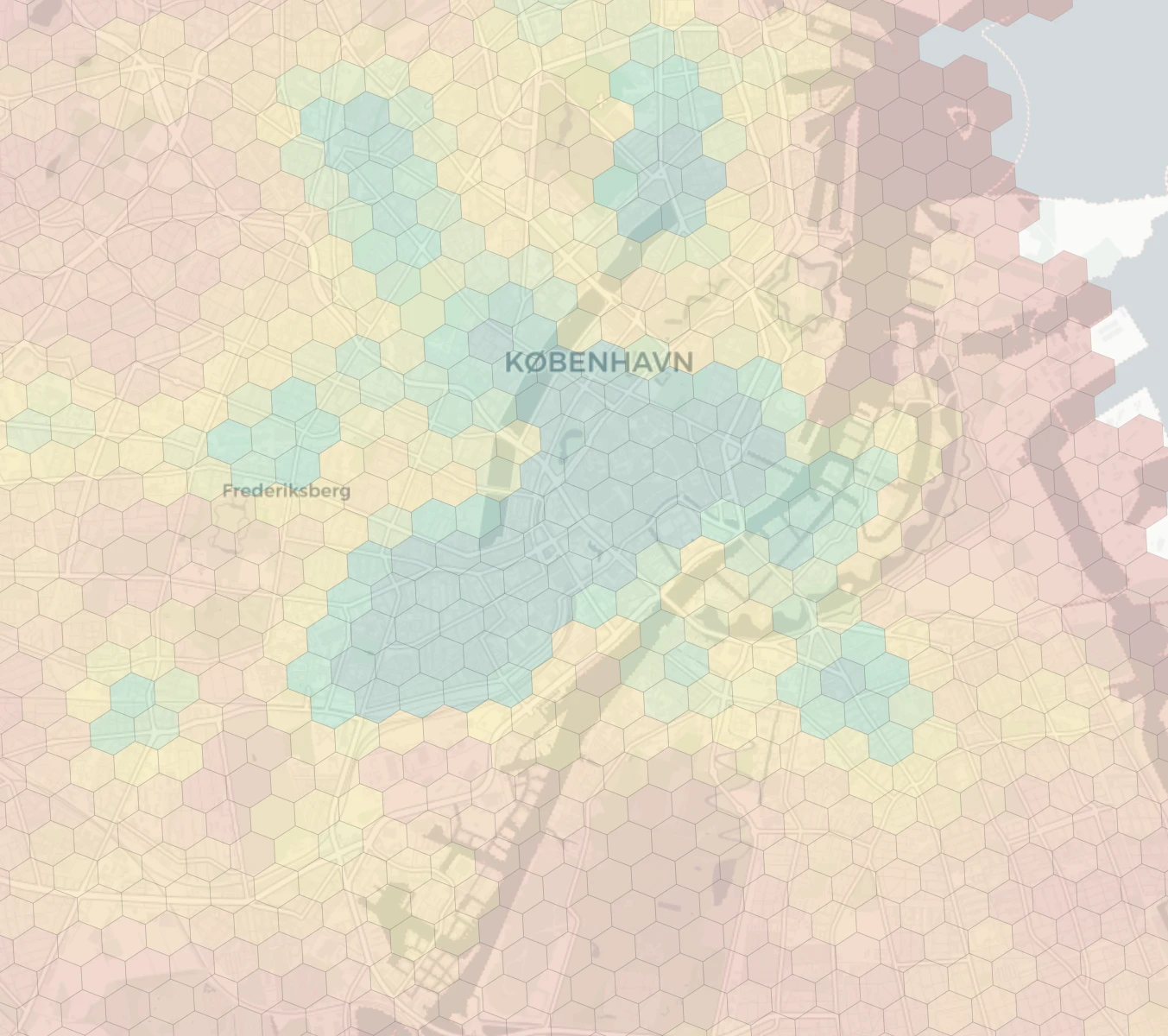
Data from OpenStreetMap contributors, licensed under ODbL. Scores computed across 22 categories using H3 hexagonal grid analysis. Last updated: 2026-04-25.