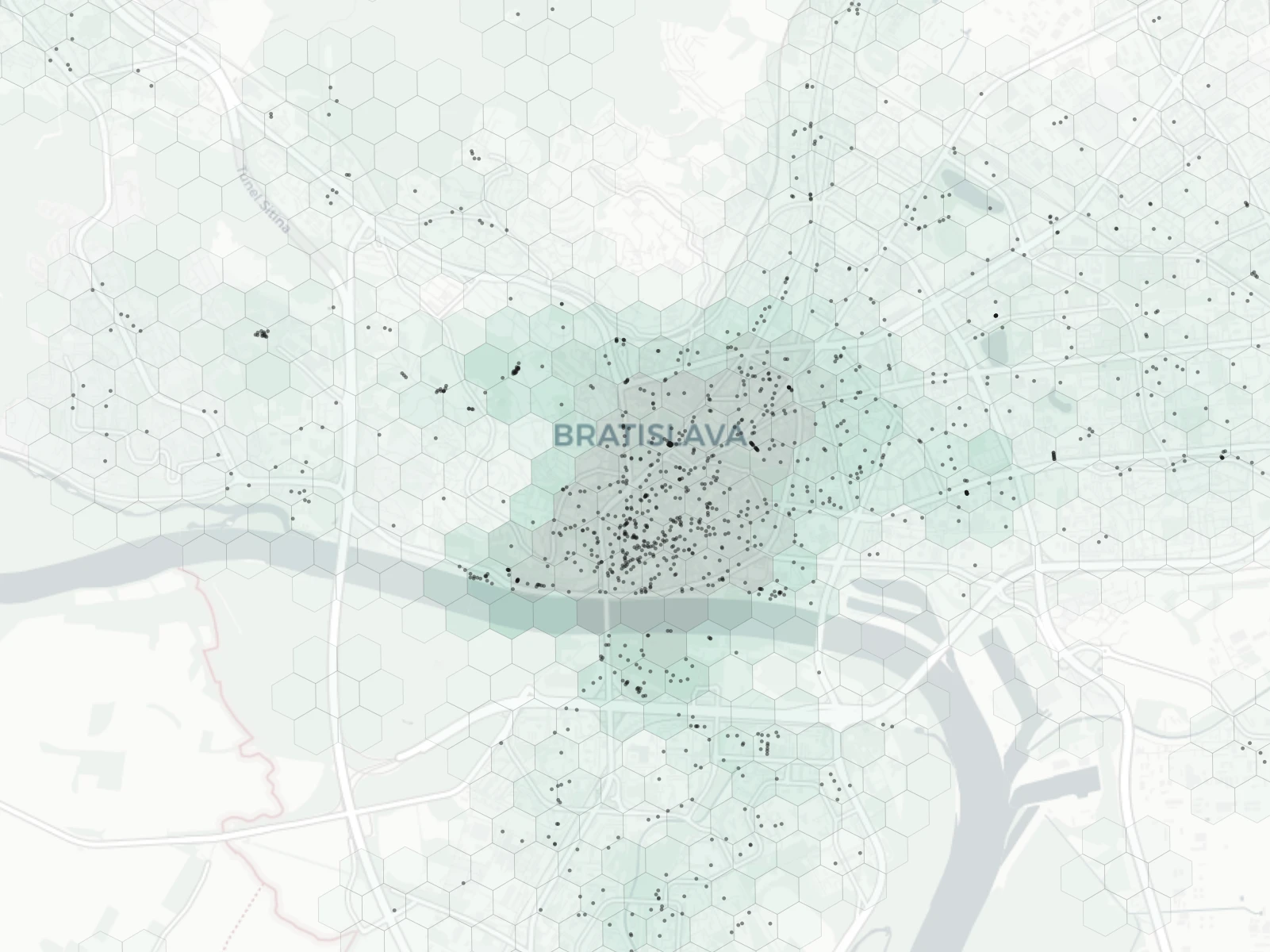
Top 5 Neighborhoods for Cafes & Culture
Cafes & Culture in Bratislava
The traditional coffeehouses of the Old Town carry their Habsburg heritage with grace. Cafe Mayer on Hlavné námestie has been serving coffee and cake since the early twentieth century, and its terrace on the main square is the classic Bratislava coffee experience. Konditorei Kormuth on Sedlárska, in a seventeenth-century cellar with ornate Baroque-style interiors, offers a theatrical setting for afternoon cake. Cafe Roland nearby is more restrained but equally established.
The specialty coffee scene has arrived with conviction. Mango Mania, Gorila, and Artisan Roastery have brought third-wave coffee culture to a city that was underserved until recently. These shops tend to cluster around the edges of the Old Town and along Obchodná ulica, and their younger crowds contrast pleasantly with the traditional Kaffeehaus atmosphere.
Bratislava's cultural offerings are concentrated but rewarding. The Slovak National Gallery on the Danube embankment covers Slovak art from medieval Gothic altarpieces to contemporary installations in a complex that combines a riverside palace with a modernist extension. The Danubiana Meulensteen Art Museum, located on a peninsula in the Danube south of the city, is worth the trip for its sculpture park and contemporary exhibitions alone.
The Slovak National Theatre operates from both its historic building on Hviezdoslavovo námestie and its modern building on the waterfront. Opera and ballet performances are frequent and remarkably affordable, and the quality of production, particularly in ballet, is high. The Bratislava Music Festival in autumn brings international classical performers to the city's concert halls.
The Blue Church, or Church of St. Elizabeth, in the Art Nouveau style is a cultural landmark that should not be missed. The Primate's Palace on Primaciálne námestie has a stunning Hall of Mirrors and a collection of English tapestries.
For contemporary culture, the A4 space on Karpatská hosts performances, screenings, and discussions that reflect Bratislava's independent cultural scene. Pistori Palace and the adjoining spaces near the castle have become a cultural hub with galleries and event spaces. KC Dunaj combines its rooftop bar with a ground-floor gallery and performance space, making it one of the city's most versatile cultural venues.