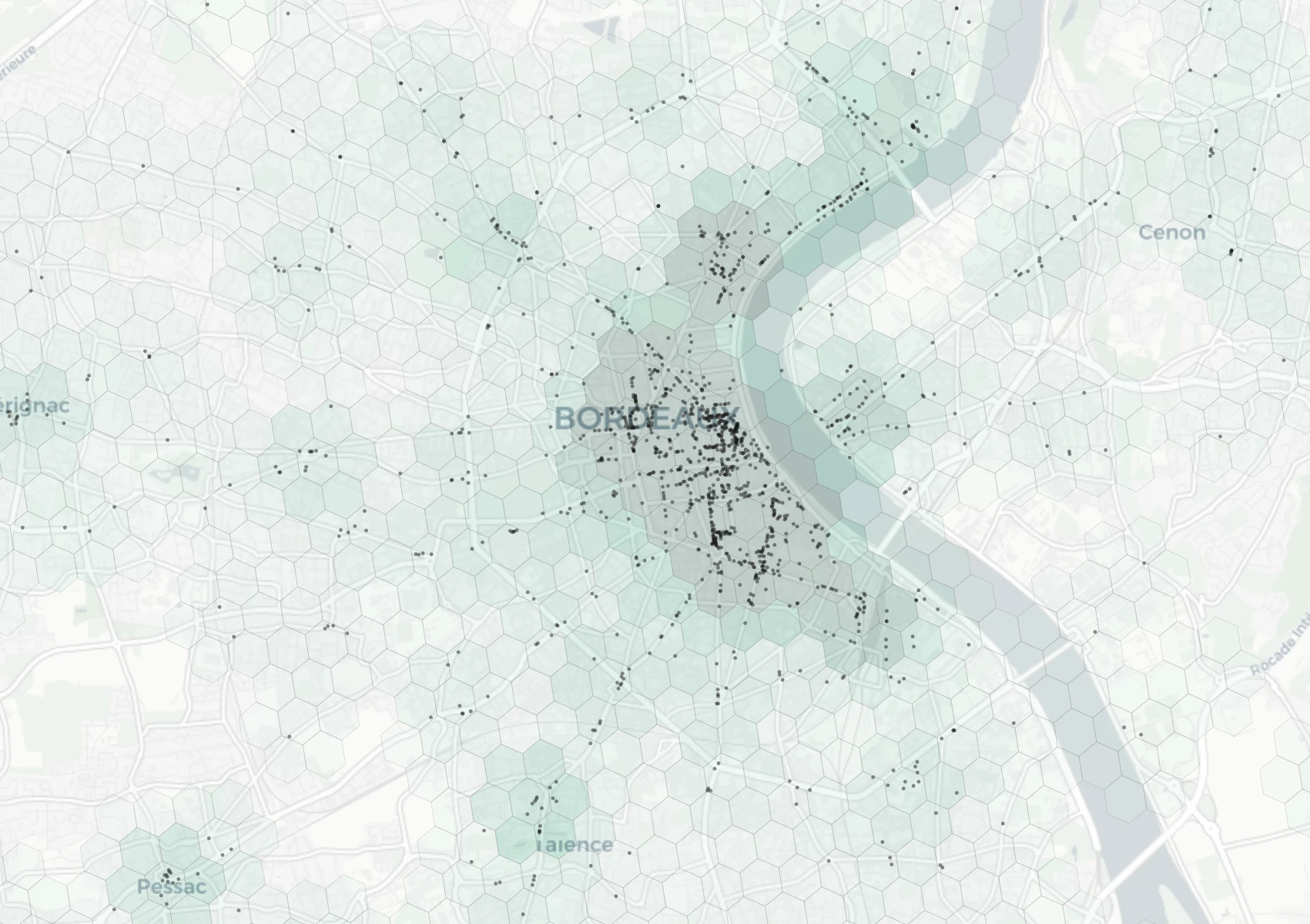
Top 5 Neighborhoods for Dining
Dining in Bordeaux
The Marche des Capucins -- known locally as the belly of Bordeaux -- is where the food story begins. Open every morning except Monday, this covered market is where chefs and home cooks share counter space, buying oysters from Arcachon, lamb from Pauillac, and cheese from the Pyrenees. The market bars serve shucked oysters with glasses of Entre-Deux-Mers white at 9am, and nobody bats an eye.
Saint-Pierre, the medieval quarter near the river, has the densest concentration of restaurants. The narrow streets around Place Saint-Pierre and Rue du Pas-Saint-Georges are lined with bistros and wine bars that range from traditional to contemporary. Lunch here often means duck confit or entrecote bordelaise with a carafe of the house red.
The Chartrons neighborhood, stretching north along the river, has become Bordeaux's most exciting dining area. The former wine merchant quarter has been revitalized with restaurants in converted chais -- the old wine warehouses. The cooking here tends toward the modern, with chefs who shop at Capucins in the morning and improvise menus based on what they find.
Saint-Michel, around the enormous basilica and its flea market, offers the most diverse and affordable dining. North African, Turkish, and Portuguese restaurants share the streets with old-school French bistros. The energy here is raw and genuine.
Seasonal eating is paramount. Autumn is cep mushroom season -- these wild porcini from the nearby forests appear in every dish from omelettes to risottos. Winter brings oysters at their best and hearty cassoulet. Spring means white asparagus from the Landes and milk-fed lamb. Summer is all about outdoor terraces, grilled fish, and rose from Provence.
The prix fixe lunch menu is your best friend in Bordeaux. Even ambitious restaurants offer a formule at midday that showcases the chef's skills at a fraction of the dinner price.