Paris, block by block
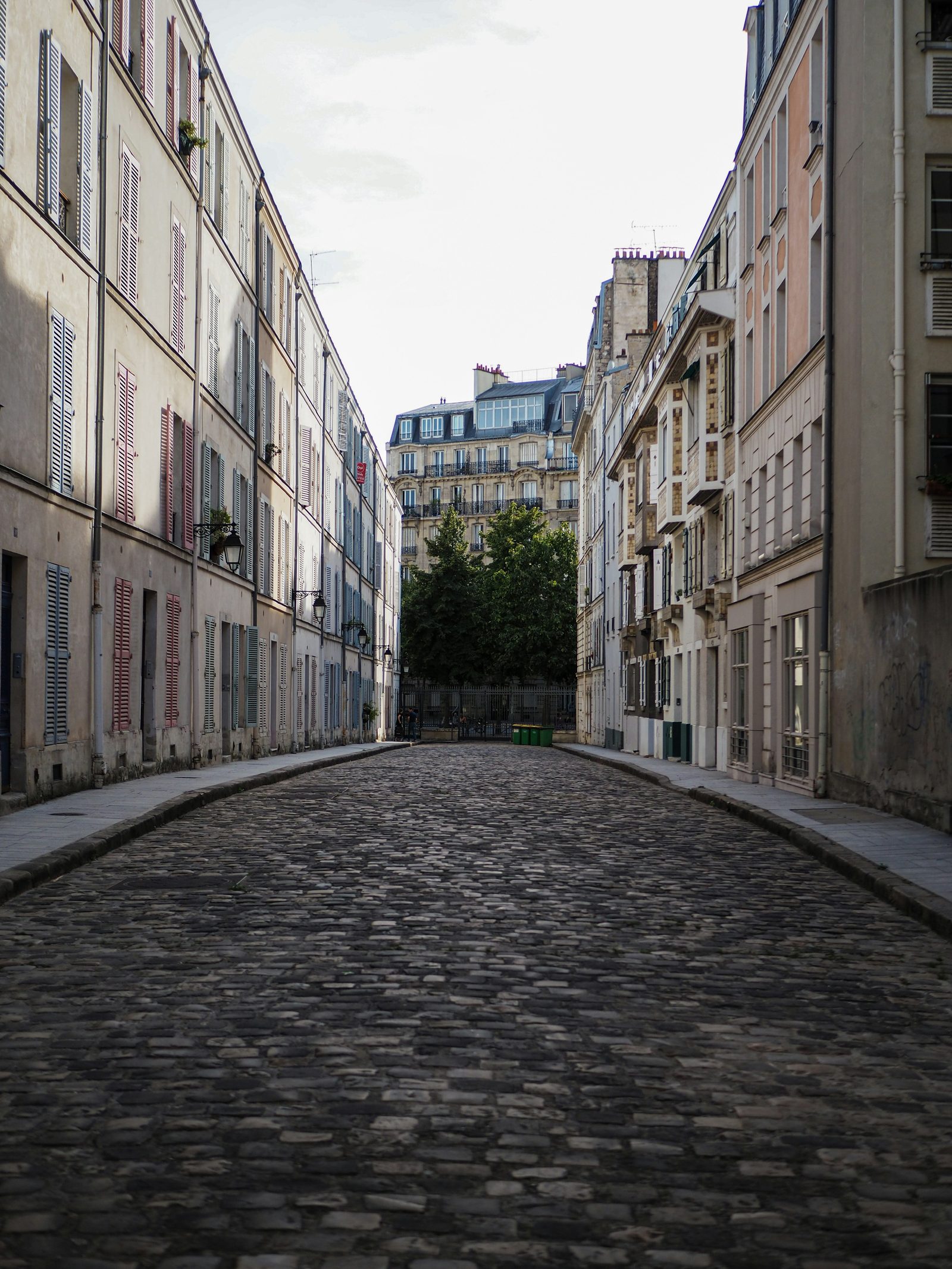
The Pont Neuf turned 421 this April. Most of Paris is younger than its oldest bridge, and the city is still losing residents to the suburbs every year.
INSEE puts 2,065,560 inside the 20 arrondissements, against 7.14 million for the Métropole. About 20% of Parisians are immigrants, and only 29.7% were born in the city itself.
Things keep moving anyway. Cycling overtook driving inside the city in 2023, with 11.2% of trips by bike against 4.3% by car. The Line 14 metro extension to Orly opened in June 2024, Notre-Dame reopened that December, and the Moulin Rouge sails fell off at 2am on 25 April 2024 and were back up before the Olympic torch passed in July.
Take the Marais, Belleville, Pigalle, and the Canal Saint-Martin. Each is doing something different with the same Haussmann skeleton.
Le Marais
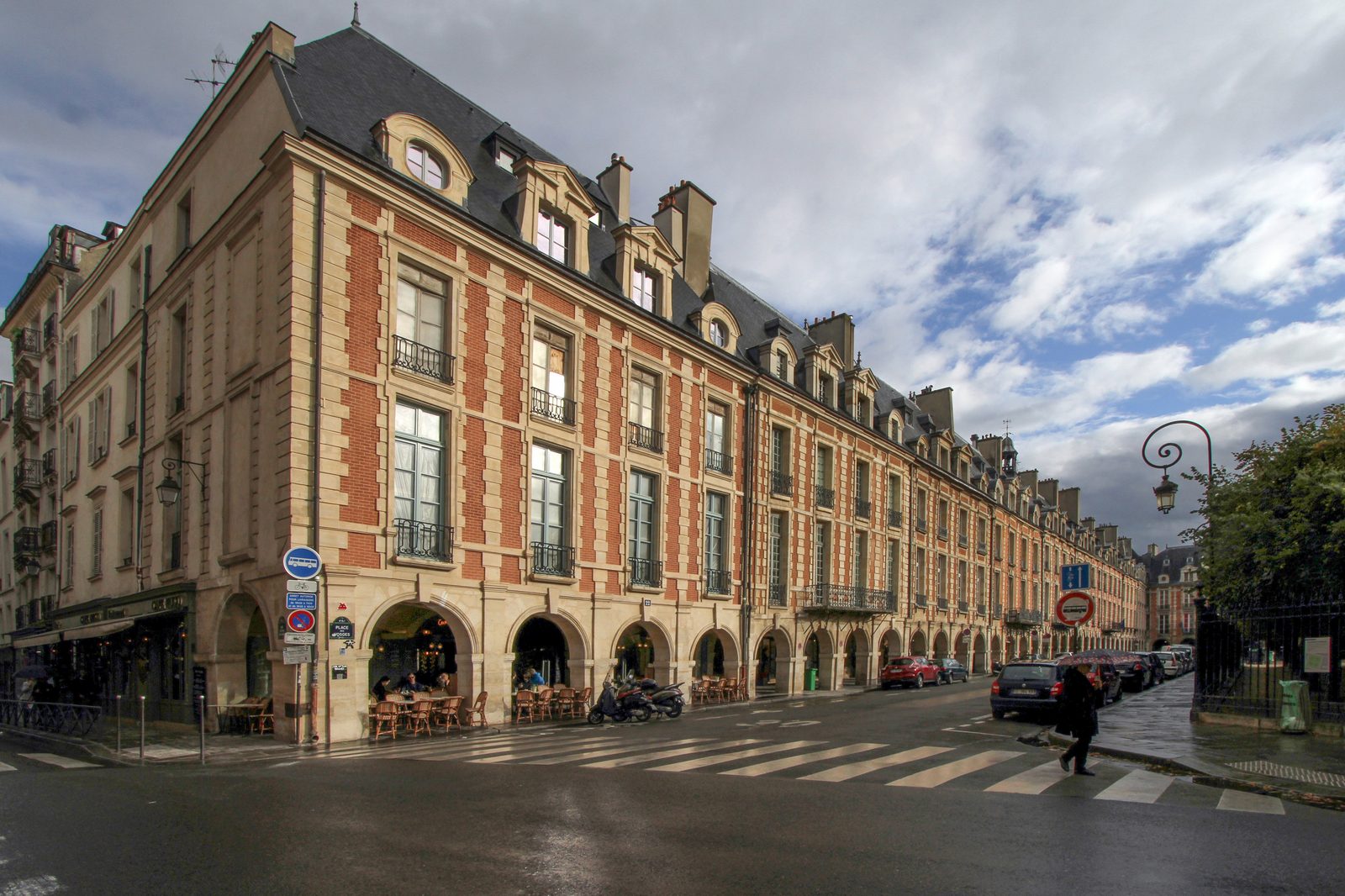
Photo: Gerd Eichmann / Wikimedia Commons (CC BY-SA 4.0)
The Marais is the only place in Paris where Sundays are a fashion runway.
The neighborhood has a religious-Sunday exemption (officially for the Saturday Jewish Sabbath in the Pletzl on Rue des Rosiers), so Rue des Francs-Bourgeois fills up while most of the city sleeps. Brunch queues at the Jewish bakeries from 11h. Victor Hugo's old apartment is a free museum at 6 Place des Vosges, kids running on the gravel below.
"Marais" means marsh. Religious orders drained it from the 13th century. Place des Vosges was built between 1605 and 1612 as Place Royale: two hectares, four sides of arcaded walks. After the Revolution the nobility left and the area collapsed into workshops and tenements.
Jewish presence here goes back to the medieval period, with a big Ashkenazi wave in the late 19th century and Sephardim from North Africa after Algerian independence in 1962. They revived the Pletzl. On 16-17 July 1942 French police, working for the Germans, arrested 13,152 Jews in the Rafle du Vél' d'Hiv, including 4,115 children, many of them Marais residents. About 42,000 Jews were deported from France that year. Around 811 came back alive.
The Marais nearly got bulldozed in the 1960s. The Loi Malraux of 1962 enabled the protected-sector law, and the Marais became the first secteur sauvegardé in France two years later. That saved the medieval street pattern.
Le Village, the first Paris gay bar with windows opening onto the street, opened at 12 Rue du Plâtre in December 1978. That's when the scene moved from the closeted Rue Sainte-Anne to the visible Marais.
L'As du Fallafel at 34 Rue des Rosiers has been there since 1979. Sacha Finkelsztajn's yellow-fronted bakery at 27 Rue des Rosiers has done gefilte fish and chopped liver since 1946. Mariage Frères opened on Rue du Bourg-Tibourg in June 1854. Open Café, the first Paris gay café with street-level windows, opened on Rue des Archives in 1995 and closed in June 2022; founder Bernard Bousset told Komitid "l'âme de quartier populaire a disparu, des boutiques de marques se sont installées à la place de commerces de proximité." The 4th arrondissement now averages around €12,500 per square metre, the Haut-Marais near Rue de la Perle hits €15-20,000.
Belleville
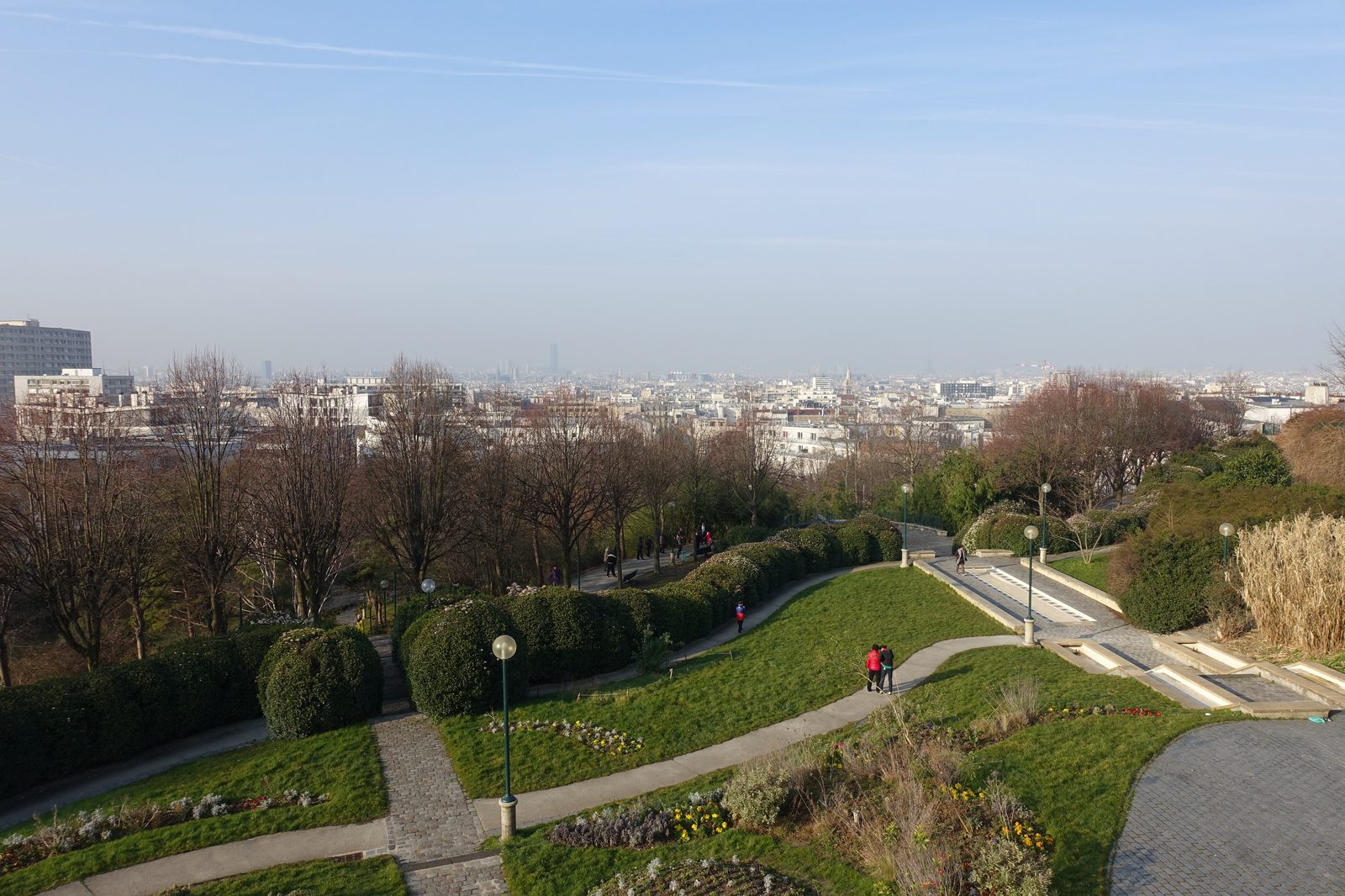
Photo: Guilhem Vellut / Wikimedia Commons (CC BY 2.0)
Belleville is a hill that climbs through three worlds in fifteen minutes.
Boulevard de Belleville at the bottom is Maghreb and West African: halal butchers, tea salons, Tunisian pâtisseries with makroud trays in the window. The market runs Tuesdays and Fridays from 7h to 14h30, since the 1860 annexation.
Halfway up Rue de Belleville the Wenzhou Chinatown takes over. Hand-pulled noodles, dumplings, the language switching mid-stretch. Most of the Wenzhou settlement happened between 1980 and 1985.
At the top, around Pyrénées and Jourdain, it goes bobo: natural wine, kids on cargo bikes, brunch.
The hill is real. About 60 metres of elevation gain over a kilometre from the métro to Parc de Belleville, which opened in 1988 with 4.5 hectares and a terrace 108 metres above sea level. The view is the highest you can get for free in central Paris.
History clings here. Belleville was annexed to Paris on 1 January 1860. Haussmann split it across the new 19th and 20th arrondissements deliberately, because he didn't trust it. The last Commune barricade fell on 28 May 1871, traditionally placed at Rue Ramponeau, although historians now debate whether it was actually Rue Julien-Lacroix.
Aux Folies at 8 Rue de Belleville, the green-tiled bar everyone photographs, kept the sign of the cabaret next door. The cabaret ran from 1872 to 1947 and hosted Chevalier and Piaf. La Bellevilloise at 19-21 Rue Boyer was a workers' cooperative from 1877, collapsed in 1936, and reopened as a cultural venue in 2006.
Le Baratin at 3 Rue Jouye-Rouve has had Argentine chef Raquel Carena cooking and a 200-bottle natural wine cellar since 1987. Apartments in Belleville still go for around €8,500 per square metre, the cheapest big neighbourhood in central-east Paris. The 20th arrondissement lost about 10,000 residents between 2009 and 2022.
Édith Piaf was born here on 19 December 1915. The plaque at 72 Rue de Belleville says she was born on the steps outside. Her birth certificate says Hôpital Tenon. The mairie keeps both stories.
Pigalle
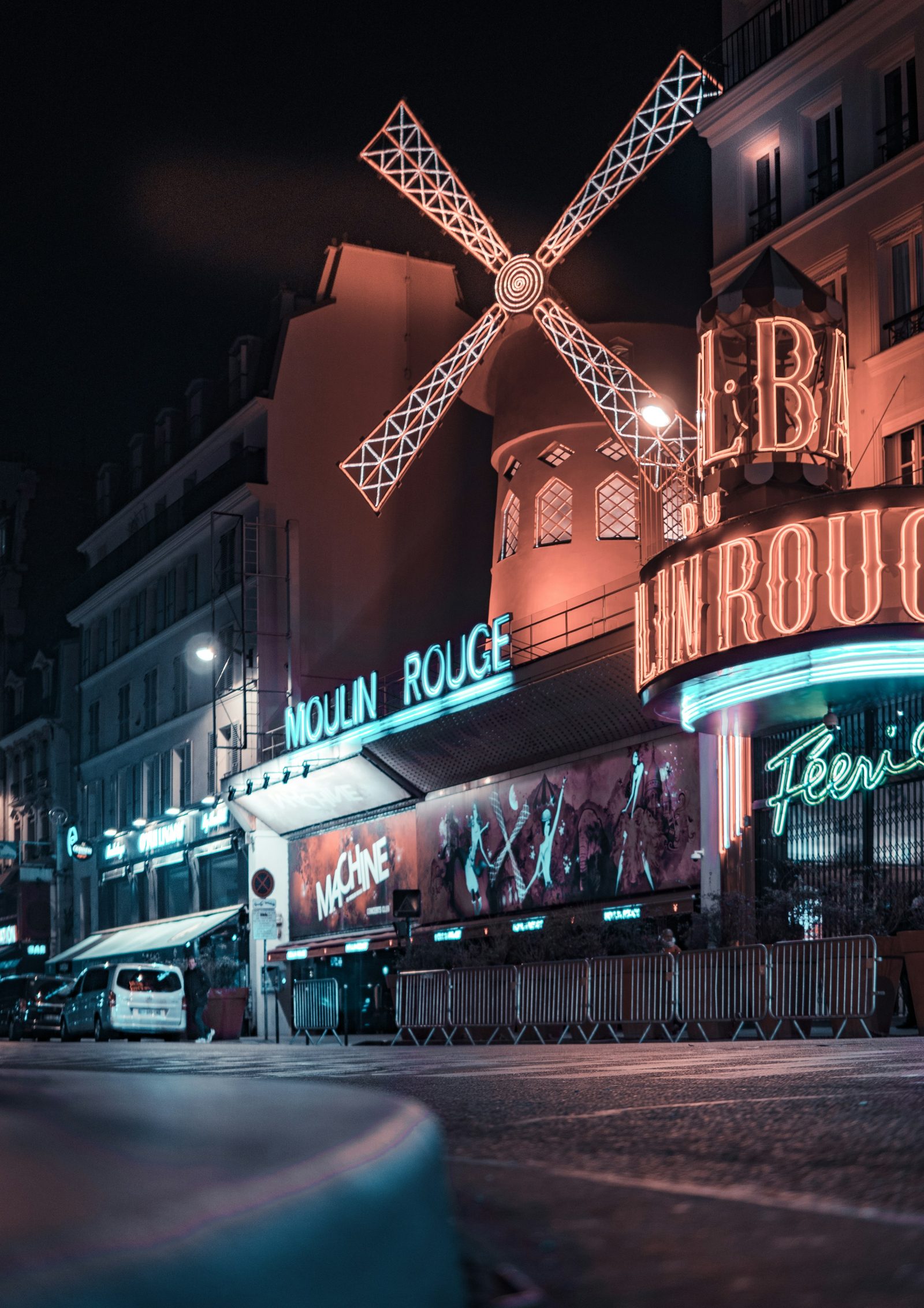
Photo: Paul Guillotel / Unsplash
Pigalle is three blocks and two centuries.
At the top, the Moulin Rouge sits at 82 Boulevard de Clichy. Joseph Oller and Charles Zidler opened it on 6 October 1889 even though the renovations weren't finished. Around it: surviving sex shops, the Bus Palladium, strip clubs, an honestly unhinged density of erotic-themed neon.
Two blocks south on Rue Frochot the cocktail bars start. Glass at number 7 opened in 2012, the soundproofed door and opaque windows still making it look slightly seedy from outside. Dirty Dick at number 10 took over a former hostess bar in February 2013 and kept the original sign. Mai tais where the pole dancers used to be.
Two more blocks south is Place Saint-Georges and the hôtels particuliers, structurally unchanged since George Sand walked past them. Sand lived in Square d'Orléans from 1842 to 1849, Chopin in the same complex, Delacroix and Géricault and Ary Scheffer keeping studios nearby.
The label was "Nouvelle Athènes," coined in the 1820s when the Saint-Georges slope went up with self-consciously antique neo-classical houses. Scheffer's old studio is now the Musée de la Vie Romantique.
Pigalle the red-light district came after. By the 1920s and 30s the area was cabarets and brothels. After the 1944 Liberation the GIs nicknamed it Pig Alley. The Marthe Richard law of April 1946 closed France's 1,400 brothels; the trade kept going on Boulevard de Clichy through the 1990s.
A local advertising guy named Laurent Abitbol coined "SoPi" in 2006, after SoHo. The bobos arrived, the cocktail wave followed in 2012-2013.
The food street is Rue des Martyrs. Sébastien Gaudard took over La Maison Seurre at no. 22 in December 2011. Rose Bakery at no. 46 has been doing English vegetable-forward brunch since 2002.
Bouillon Pigalle at 22 Boulevard de Clichy opened in late November 2017 with 200+ seats, no reservations and oeuf mayo for €2-something. The queue goes around the block. The 9th arrondissement averages around €10,500 per square metre now.
Canal Saint-Martin
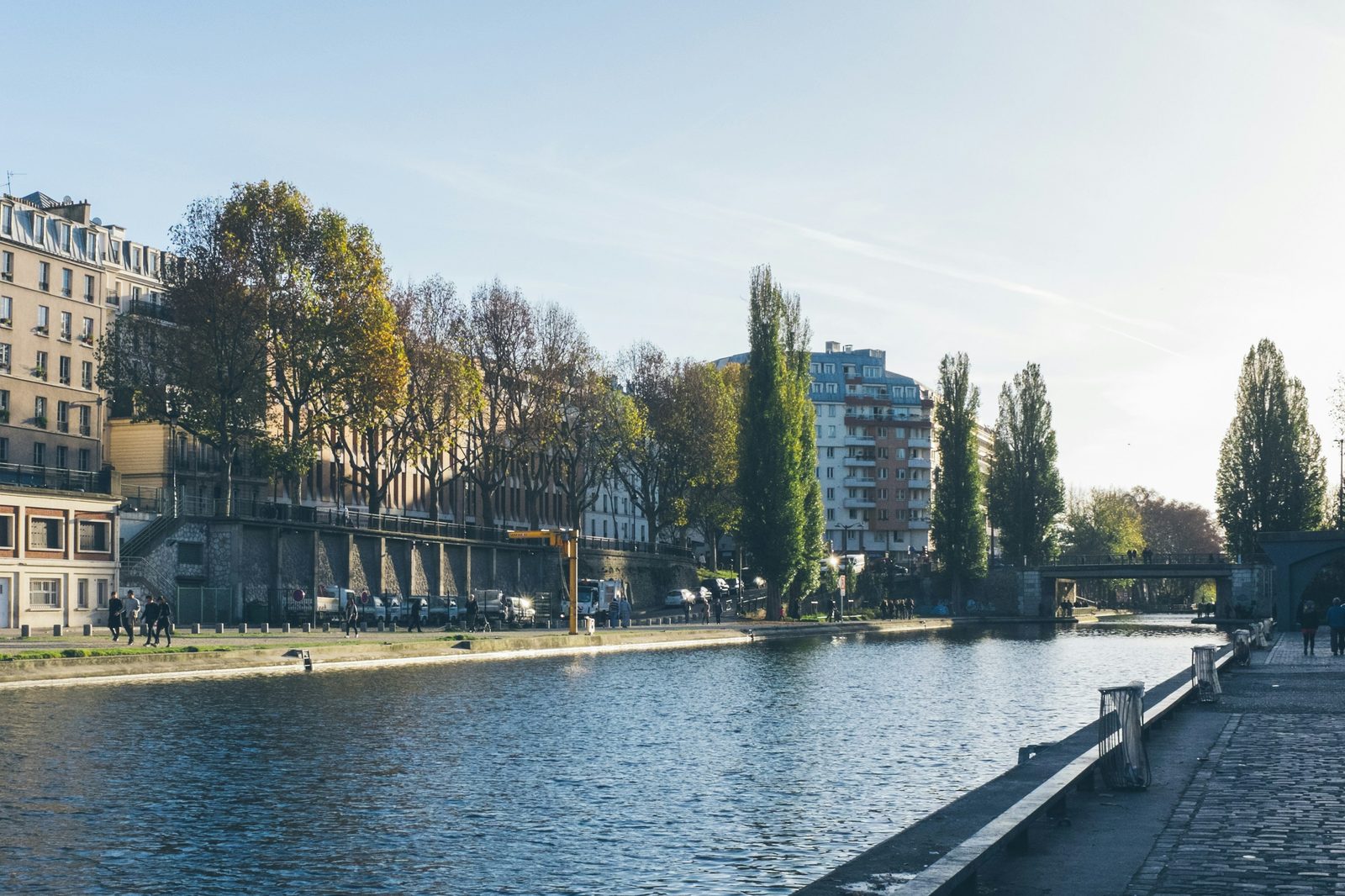
Photo: Thomas Loizeau / Unsplash
The canal is 4.5 kilometres of water, nine locks, a 25-metre drop.
Napoléon authorised it in 1802 to bring fresh water and reduce cholera. It opened in 1825. Two swing bridges still pivot when a barge passes: the Grange-aux-Belles bridge from 1885, and the Rue Dieu bridge that was renamed Pont Bernadette Lafont in October 2024.
Sundays the quai shuts to cars, has been piéton le dimanche for years, and an eight-month works phase started in late September 2025 to widen the footpaths and add a two-way bike lane on the Jemmapes side. People bring rosé, baguette, hummus from the Marché Couvert Saint-Martin, sit on the stone steps, dangle their feet. Brunch demographic: 25-40, freelance, lots of strollers since around 2018.
The myth came from two films. Marcel Carné shot Hôtel du Nord here in 1938 with Arletty and Louis Jouvet, the "Atmosphère, atmosphère" line from this stretch. The hotel nearly went under the bulldozer in the 1980s and was classified monument historique on 15 June 1989.
Then in 2001 Jean-Pierre Jeunet released Le Fabuleux Destin d'Amélie Poulain, with Audrey Tautou skipping stones from the lock. The ricochets were CGI. Around that film, the bobo wave landed.
Du Pain et des Idées at 34 Rue Yves Toudic, where Christophe Vasseur took over an 1875 boulangerie in 2002, has had a Saturday queue down the street for fifteen years. Antoine et Lili's three pink, green and yellow shopfronts have been at 95 Quai de Valmy since 1994.
The wound is more recent. On 13 November 2015 at 21h25, three attackers in a black Seat León opened fire on the terrasses of Le Carillon and Le Petit Cambodge on Rue Alibert. Fifteen died there. Seven minutes later the same car hit À la Bonne Bière, killing five. Minutes after that the team attacked La Belle Équipe on Rue de Charonne, where 21 were killed.
Total across all six sites that night: 130 dead. Le Petit Cambodge reopened in March 2016. Grégory Reibenberg, who runs La Belle Équipe and lost his wife there, told Franceinfo on the tenth anniversary: "C'est trop dur à porter."
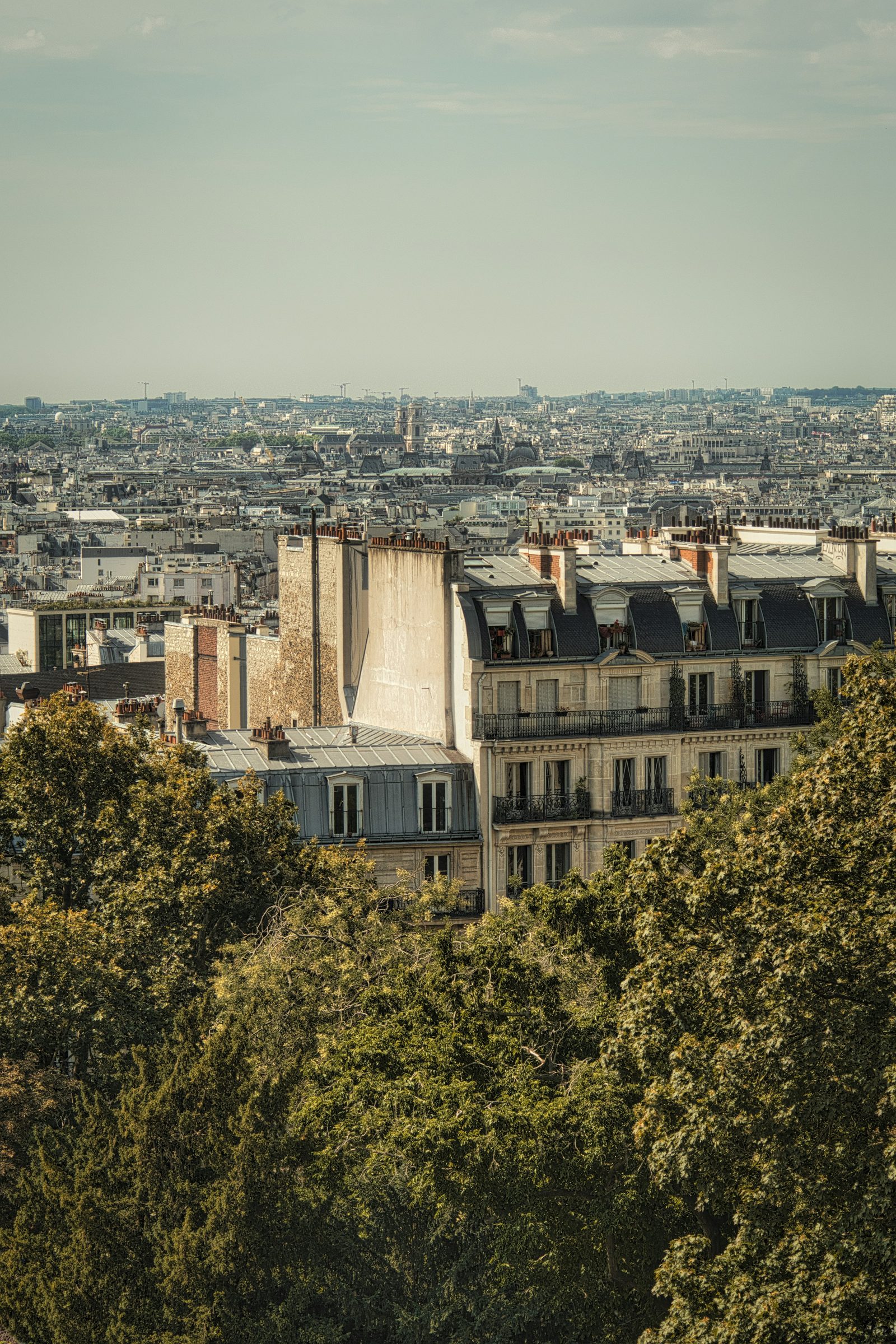
Photo: PerfectMirror / Unsplash
Anne Hidalgo's target is 30% social housing by 2030, 40% by 2035. Paris lost about 73,000 residents between 2015 and 2021. The Métropole around it kept growing.
At Le Petit Cambodge the bullet holes in the window frame were left visible when the restaurant reopened. Customers eat phở underneath them.
See the full Paris neighborhood scores or explore the map. Data from OpenStreetMap.