Berlin, block by block
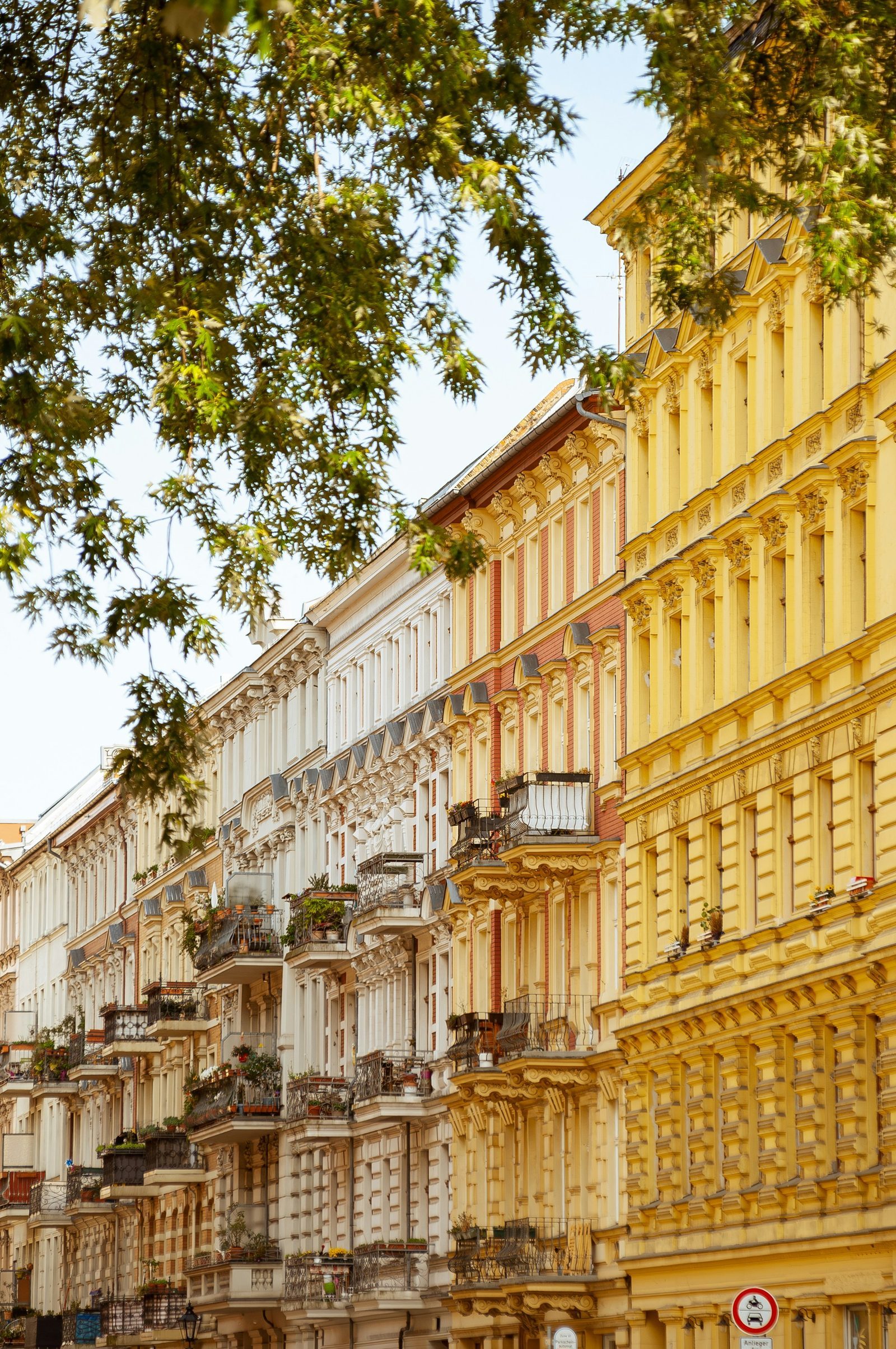
Berlin has the wall in the head, not the ground. The physical one came down on 9 November 1989. The mental one is still up and you can feel which side of it you're on as soon as you walk a few streets.
A Forsa poll found only 35% of Germans think East and West have really grown together. In the East it's 23%, in the West it's 37%. Thirty-five years in and the city is still two cities that happen to share a U-Bahn map.
The population just passed 3.9 million, highest since 1991. A quarter of residents hold foreign passports. Rents rose about 85% between 2007 and 2019, then the rent cap got struck down by the constitutional court and rents went up again, this time faster. Four districts, one story told from different decades. Read them in order and you're basically watching gentrification move across the map.
Mitte
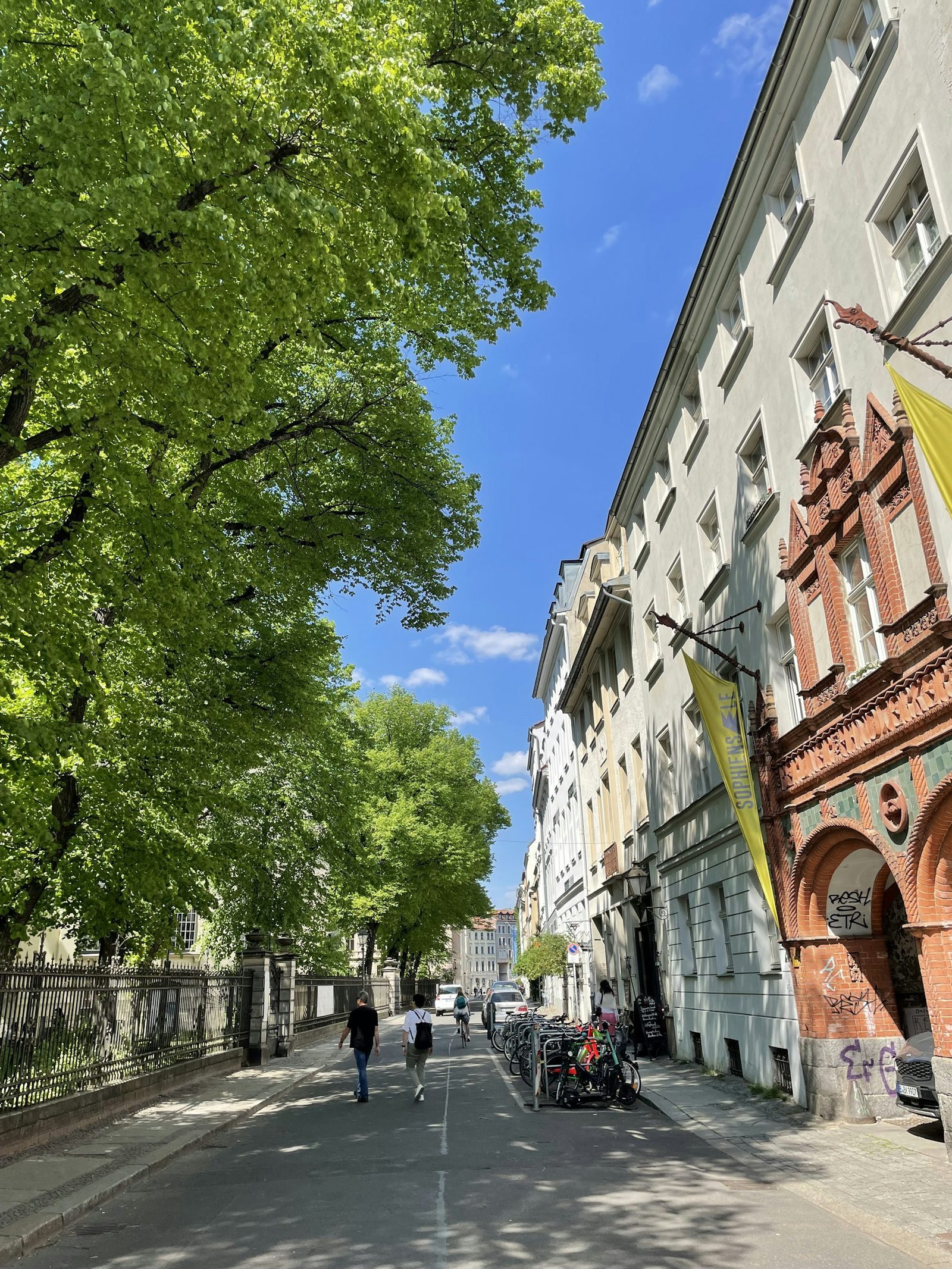
Photo: Andrea Fiori / Unsplash
Mitte is the most photographed part of Berlin and the part locals live in least.
The monumental center is dead at night. Brandenburg Gate, Museum Island, Unter den Linden, Checkpoint Charlie. Tourists by day, office workers by morning, nothing after 9pm. The restaurants under the S-Bahn arches at Hackescher Markt are a rip-off. The locals' rotation moved out of this district years ago, to Kreuzberg for drinking, to Prenzlauer Berg for brunch, to Neukölln for whatever's left.
The Scheunenviertel is the exception. Walk north from Alexanderplatz toward Rosenthaler Platz and the street pattern gets older, not newer. Auguststraße is a gallery strip. Torstraße fills up with people walking between bars after eight.
Clärchens Ballhaus on Auguststraße has been a dance hall since 13 September 1913, when Fritz and Clara Bühler opened it. Of the hundreds of ballrooms Berlin once had, this is the last one still running. Heinrich Zille had his regular bar seat there. The place survived two world wars and five systems of government.
The Volksbühne is at Rosa-Luxemburg-Platz. Tacheles, the squat that defined Mitte's wild early-90s moment, was cleared in 2012 and redeveloped into a luxury mixed-use complex that tells you everything about what changed. Torstraße, Auguststraße, and Oderberger Straße still have the feel of a neighborhood, if you know to go there. The rest is for the cameras.
Kreuzberg
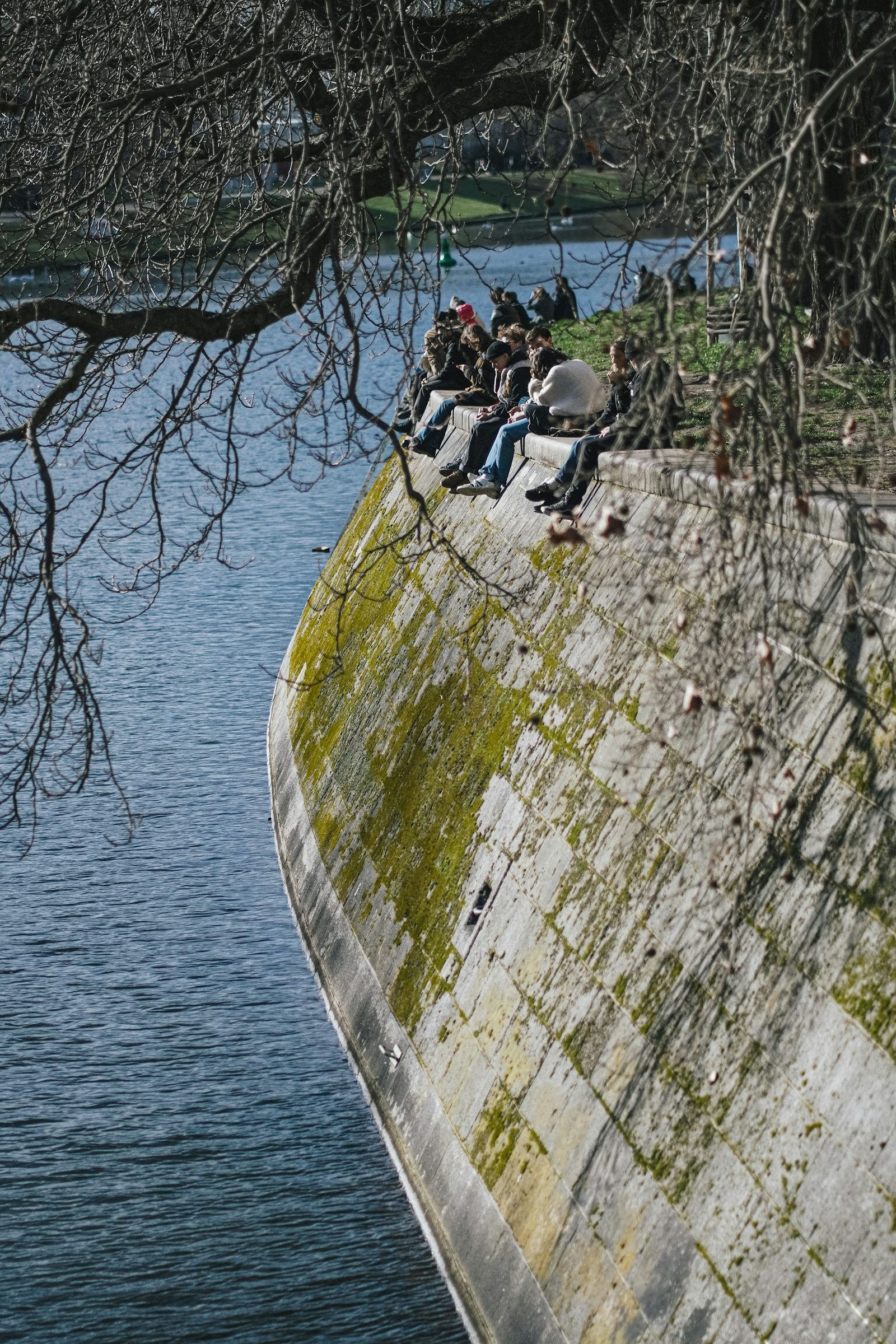
Photo: Victoria Prymak / Unsplash
Kreuzberg is always about to stop being Kreuzberg. It has been since at least 1985.
The story everyone knows: Turkish guest workers arrived after the October 30, 1961 labor agreement. Rent in the western half was cheap because SO36, the eastern postcode, was hemmed in on three sides by the Wall. Punks squatted. Artists squatted.
The May Day riots started on 1 May 1987 when the police had to retreat from Oranienstraße for several hours and have been an annual tradition since. The Myfest street festival was invented partly to dilute the riot, and now the riot and the festival happen at the same time.
The story no guide quite tells: property prices have hit around €8,000 per square meter for flats in a district still marketed as bohemian. Clubs on Oranienstraße got replaced by cafes in the 2000s. SO36, the punk venue at Oranienstraße 190, has been operating since 1978 and still books shows that would get noise complaints anywhere else. One resident quoted by The Berliner said "it's a contradiction that people come to Kreuzberg for its spirit, but their presence is destroying it." Another said listings now show €800 for a 14 square-meter room.
The food is still the reason to come. Markthalle Neun at Eisenbahnstraße, the market hall originally built in 1891 and relaunched as a food market in 2011, runs Street Food Thursday every week. Hasir at Adalbertstraße 12 opened in 1971 and has a disputed claim on inventing the döner sandwich; several other Berlin Turks contest it. The Turkish market on Maybachufer runs Tuesday and Friday, from the canal inland.
The city is currently rolling out a fence around Görlitzer Park with gates that close at night, starting 1 March 2026, a CDU policy to push drug dealing somewhere else. The Friedrichshain-Kreuzberg district tried to block it in court and lost. Residents point out that fencing a park just moves the problem two blocks over. Nobody on Oranienstraße is pretending this is a solution.
David Bowie recorded most of Low and Heroes at Hansa Tonstudio on Köthener Straße in 1977. Nick Cave lived on Dresdner Straße until 1990. That Kreuzberg, the 1980s Kreuzberg, is partly still here. You just have to show up before the stag parties do.
Neukölln
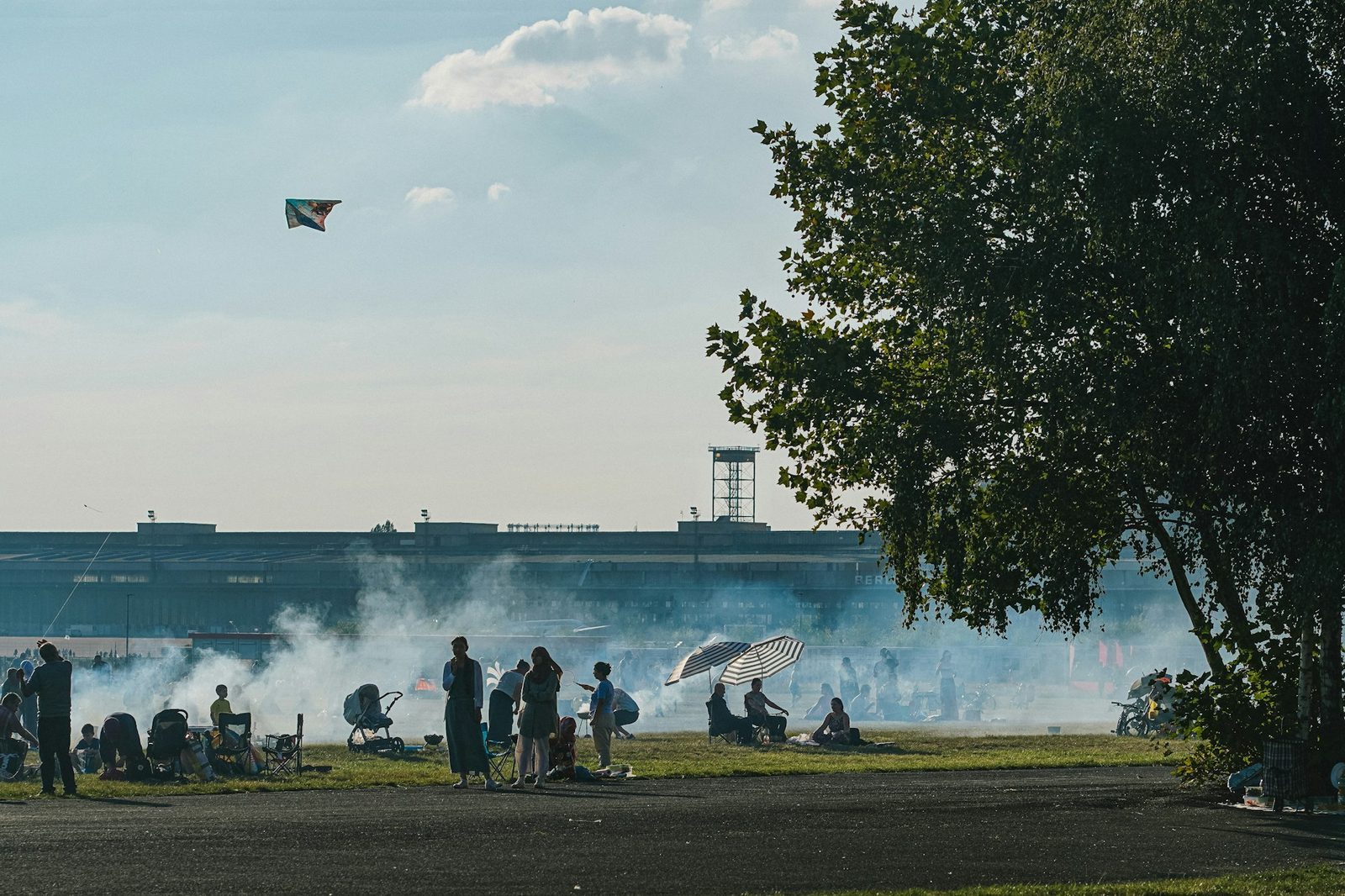
Photo: Victoria Prymak / Unsplash
Neukölln is where the Kreuzberg scene moved ten years ago and started complaining about gentrification from the other side.
Northern Neukölln, the part above the Ring, is now the center of English-speaking Berlin. Weserstraße is the bar strip, one venue after another. Silver Future, the queer bar on Weserstraße, has been operating since 2007. Klunkerkranich is the rooftop of the Neukölln Arcaden shopping center and books DJs and cinema nights; it opened in 2013. The 25-year-olds who moved to Berlin in the last five years mostly live here.
The other Neukölln is on Sonnenallee, which runs south from Kottbusser Tor. Syrian, Lebanese, Palestinian, Turkish. Shawarma at every fifth storefront. Mussa Fakhro told Middle East Eye he opened his shop there in 2001 when "it was very quiet," and that the street "has become a destination, especially for Arabs." His rent rose after the street got a facelift. The SCMP covered the risk of the Arab community being priced out of the neighborhood they defined.
Between the two Neuköllns, friction. Körnerpark is a sunken neo-baroque garden from 1912-1916 that most English-speaking Berliners haven't found yet. Richardplatz is a Bohemian weaver village that's been here since 1737, settled by Protestant refugees under Friedrich Wilhelm I. Schillerkiez is quieter and feels more lived-in than Reuterkiez, which is where the bar density peaks.
Tempelhofer Feld is the escape valve. An entire decommissioned airport, now one of the largest inner-city open spaces in Europe, kept as open field because a 2014 referendum banned development on it. On warm weekends the runways fill with picnics, cyclists, kite-flyers, and people barbecuing on the grass. It's the one place in Berlin where you can see the sky go edge to edge.
Prenzlauer Berg
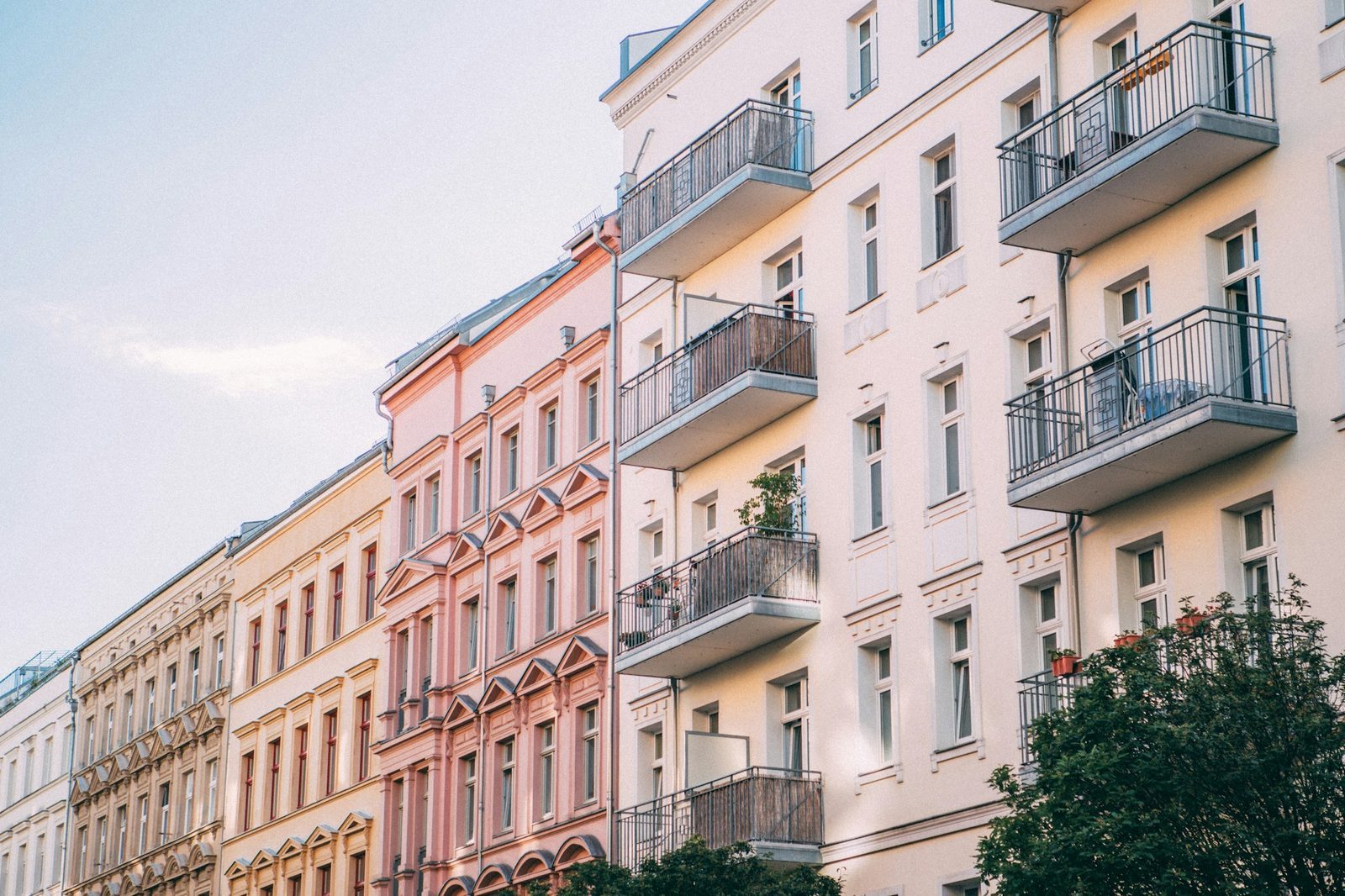
Photo: Jonas Denil / Unsplash
Prenzlauer Berg is what the other three neighborhoods are arguing about becoming.
It was East Berlin, unrenovated under the GDR, full of GDR-era dissidents and illegal art magazines by the late 1980s. When the Wall came down the area emptied out and filled up again with squatters, artists, punks, and West German developers in roughly that order. By 1994 Kollwitzplatz had about 100 bars within walking distance and tenants were already calling the noise intolerable. By 2005, as one Berlin historian wrote, the squatters had moved on, rents had tripled, and the new cliché was strollers and brunch.
Around 80% of the pre-1989 population left. The shops they used went with them: the pensioner's rooms, the post office, the bakers, the fruit-and-veg shop, the local children's library. In their place: posh restaurants, natural wine bars, yoga studios, kids' play cafes.
The Swabians arrived and the hatred of Swabians arrived with them. In German media the term is Schwabenhass, a generalized resentment of southern-German yuppies who moved north and bought the expensive flats. Zitty magazine called them Porno-Hippie-Swabians. In June 2008 a 24-year-old student named Patrick Technau organized a demo under the slogan "F Yuppies," aimed at the Marthashof development on Schwedter Straße. In 2013 a group of Spaßguerillas declared Free Schwabylon, a fictional micronation for Swabian emigrants, centered on Kollwitzplatz.
The original Prenzlauer Berg is still findable. Konnopke's Imbiss has been at Schönhauser Allee 44b under the U2 viaduct since 1930, when Max Konnopke started the stand. Currywurst came later. The dish was invented in postwar Berlin, and Konnopke's became one of its most famous stands on the eastern side of the city.
Prater Biergarten on Kastanienallee has been pouring beer since 1837, making it the oldest beer garden in Berlin. The Kollwitzplatz organic market runs every Saturday between 9am and 4pm, with producers from Brandenburg, and it's still a place where old East Berliners argue with new arrivals over the price of apples.
The cargo bikes are everywhere. Kastanienallee, which the locals call Casting Allee because everyone on it looks like they're auditioning for a casting, is as much a stage as it ever was. It's just that the 2026 audience is different from the 1996 one.
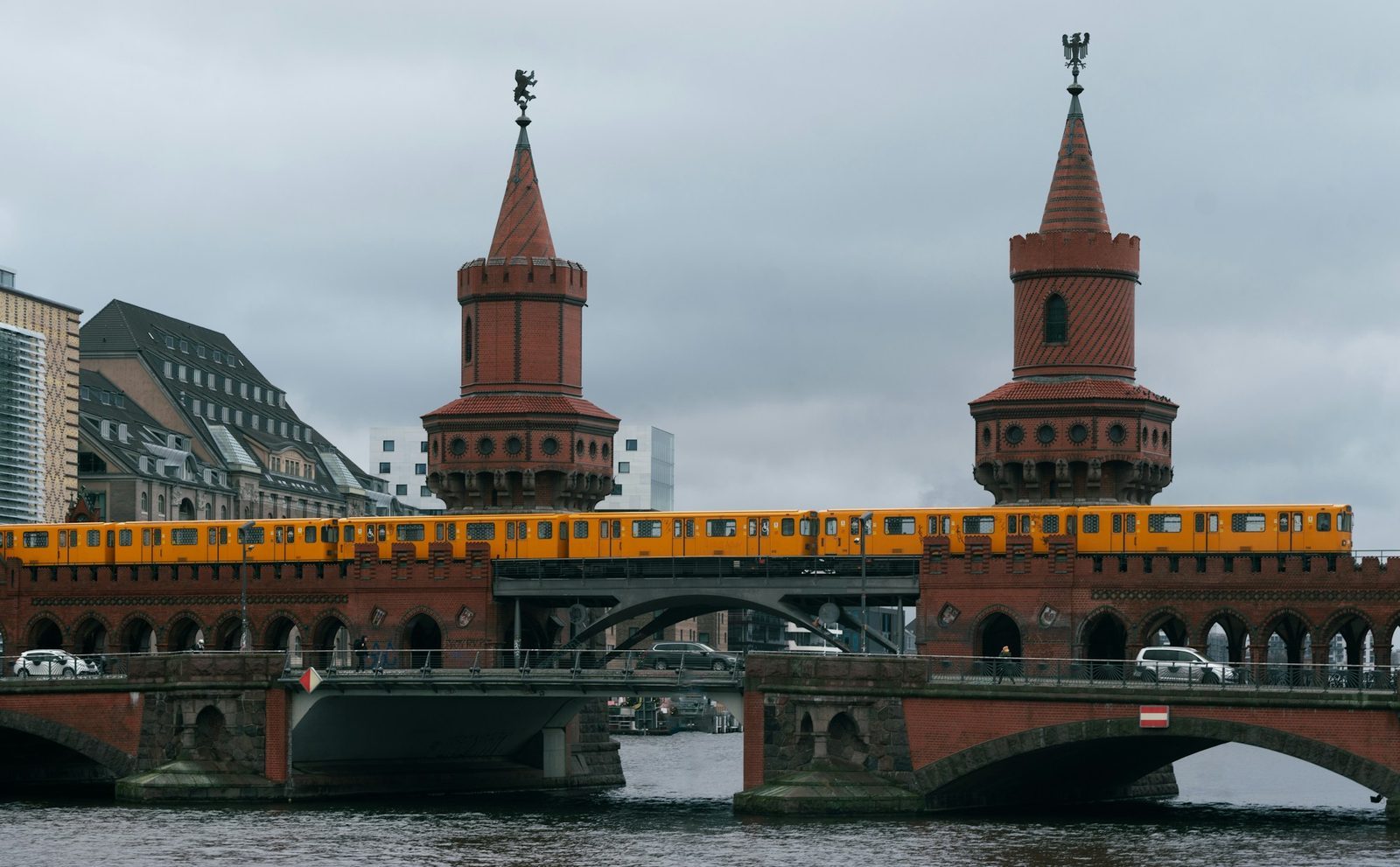
Photo: Henry Addo / Unsplash
The gentrification timeline goes: Prenzlauer Berg in the 1990s, Kreuzberg through the 2000s, Neukölln through the 2010s. Ask a Berliner what's next and they'll say Wedding has been "coming" for twenty years without arriving. Lichtenberg is the real answer. Cheap rent, Plattenbau, the Dong Xuan Center full of pho shops most English-speaking Berliners have never been to, and the only thing stopping it from being the next Neukölln is that nobody writes about it.
The referendum to expropriate Deutsche Wohnen passed with about 58% of the vote on 26 September 2021 and hasn't been implemented. The rent cap got struck down. The wall in the head is still up. Berlin keeps changing, and the argument about what Berlin is stays the same.
See the full Berlin neighborhood scores or explore the map. Data from OpenStreetMap.